
Plant profile
Monstera deliciosa
Monstera deliciosa
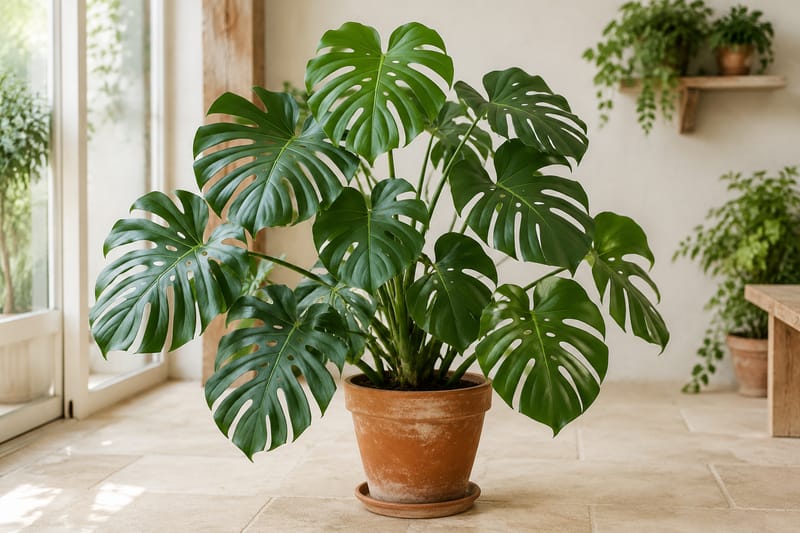
Identify Monstera deliciosa by its climbing growth, aerial roots and mature split leaves, then learn its essential indoor care, safety and common problem signals.
Light
Bright, indirect
Water
Water when the top 2 to 3 inches of potting mix are dry
Soil
Chunky and draining
Temperature
Warm, draft-free
Plant dossier
Plant overview
Monstera deliciosa is an evergreen climbing aroid from the wet tropical regions of southern Mexico through Central America. In homes it is grown for its large, glossy foliage rather than for flowers or fruit. Its stems climb with aerial roots, so a plant can grow taller and heavier than its juvenile form suggests.
Young Monstera leaves may be smaller and solid. As the plant matures, its leaves develop the cuts and holes known as fenestrations that give the Swiss cheese plant its familiar appearance. The most useful measure of progress is the newest growth: older leaves do not develop new splits after they have finished expanding.
Plant identification
Botanical characteristics
- Family
- Araceae
- Native range
- Southern Mexico to Panama
- Growth habit
- Evergreen tropical vine
- Care level
- Easy to moderate
- Common names
- Swiss cheese plant, Ceriman
- Propagation
- Stem cuttings with at least one node, Air layering
- Pet safety
- Toxic to cats and dogs if chewed or ingested
Common names: Swiss cheese plant, split-leaf philodendron, ceriman and Mexican breadfruit. The correct botanical name is Monstera deliciosa and it belongs to the arum family, Araceae.
Look for a climbing habit, thick stems, aerial roots and glossy heart-shaped leaves. Mature leaves are deeply cut and often perforated; young plants can have whole leaves with no holes. Monstera adansonii is a different, generally smaller houseplant species with a more delicate habit, so common names alone are not a reliable identification method.
Care foundation
Care summary
Give a Monstera bright, indirect light, an open potting mix that drains well, and a container that does not leave the roots sitting in water. The first checks are usually light exposure and moisture in the root zone: low light slows growth, while a pot that remains wet too long increases the risk of root problems.
Detailed care
Read the conditions, not a calendar
Light
Place the plant in bright, filtered or indirect light. Direct hot sun can scorch foliage. In persistently low light, new leaves may grow more slowly and may show fewer holes or splits. Move a plant gradually when changing its position, then judge the response from new growth rather than damaged older leaves.
Watering
Check the potting mix rather than watering by a fixed calendar. Water thoroughly after the upper 2 to 3 inches of mix are dry, then allow excess water to drain. Empty standing water from a saucer so roots are not left in runoff.
Mix that stays wet for days, repeated yellowing of lower leaves or a sour smell are signals to pause and review drainage. Very dry mix well below the surface, limp foliage or crisp edges can signal that watering has been delayed. Brighter, warmer conditions generally make the mix dry faster than darker, cooler conditions.
Soil and pot
Use an open, well-draining potting medium with organic material and structure that allows air around the roots. Bark and perlite are commonly used to keep an aroid mix from becoming dense. A pot needs drainage, and it should hold the rootball comfortably without being dramatically larger than the previous container; excess unused compost can remain wet for too long.
Temperature and humidity
Keep Monstera warm and away from cold drafts or direct heat from radiators and vents. RHS guidance places Swiss cheese plants at 18–25°C (65–77°F) with moderate humidity. Dry indoor air can contribute to browning at leaf edges, so adjust the plant’s environment instead of treating every brown edge as a watering problem.
Growth and maintenance
Support the way it grows
Feeding
Feed only while the plant is actively growing, using a balanced liquid fertiliser according to its label. Reduce inputs when growth slows in lower-light periods. Fertiliser cannot correct poor light, compact wet soil or drainage problems; solve those conditions first. For a full seasonal care system, use the complete Monstera care guide.
Support and aerial roots
Monstera deliciosa climbs in nature and benefits from a stable support indoors. A moss-covered pole can give aerial roots somewhere to attach and help support a top-heavy plant. Keep aerial roots unless they are damaged or in the way, and use clean tools for any pruning.
Repotting and pruning
Repot based on the rootball and the stability of the plant, not a fixed calendar. When a vigorous plant has outgrown its container, choose a pot only a little larger. A plant that becomes too large for its space can be pruned, but new growth may initially be less mature.
Safety
Toxicity and safety
Monstera deliciosa is not pet-safe. The ASPCA lists it as toxic to cats and dogs because of insoluble calcium oxalates, which can cause oral irritation, drooling, vomiting and difficulty swallowing. Keep the plant out of reach of pets and children. If a pet may have eaten it, contact a veterinarian or ASPCA Poison Control promptly.
RHS also lists the plant as harmful if eaten and as a potential skin or eye irritant. Wear gloves when handling damaged stems or pruning if you are sensitive to plant sap, and seek advice from a local poison-control or healthcare service for concerning human exposure.
Observation
Problems and observation
Check first
Yellow leaves often point to prolonged wetness, low light or normal aging of a lower leaf. A single symptom is not a diagnosis: check the mix, light and drainage before changing several conditions at once.
Observe
- Yellow leaves: check how long the mix stays wet and whether the oldest leaves are affected first.
- Drooping or soft growth: inspect moisture, drainage and roots before adding more water.
- Brown edges or black spots: review light exposure, dry air, watering and leaf damage; use a dedicated diagnosis page when available.
- Leaves not splitting or slow growth: look at plant maturity, usable indirect light and whether the vine has stable support.
Safe next action
Start with the root zone: check the mix and whether water can leave the pot. Then assess light at leaf level, followed by root health and the plant’s support. Make one correction at a time and observe the next new leaf; existing damage often remains even when the growing conditions improve.
04Open a related diagnosis
Frequently asked questions
How often should I water a Monstera?
Check the upper potting mix and water only after it has dried to the depth described on this page. Light, temperature and season change how quickly a pot dries, so a fixed weekly schedule is less reliable than checking the mix.
How much light does a Monstera need?
Monstera deliciosa grows best in bright, indirect light. Direct hot sun can scorch leaves, while persistently low light can slow growth and reduce the number of holes or splits on new leaves.
Why are my Monstera leaves not splitting?
Young plants may make solid leaves. Mature splits, called fenestrations, are more likely as a plant grows in adequate indirect light and has support for its climbing habit. Judge the newest leaves rather than expecting an older solid leaf to split later.
Is Monstera toxic to cats and dogs?
Yes. The ASPCA lists Monstera deliciosa as toxic to cats and dogs because it contains insoluble calcium oxalates. Keep it out of reach, and contact a veterinarian or ASPCA Poison Control promptly if a pet may have eaten it.
Does a Monstera need a moss pole?
A support is not required for a plant to stay alive indoors, but Monstera deliciosa is a climber. A moss-covered pole or other stable support can help its stems climb and may support larger, more mature leaves.
When should I repot a Monstera?
Consider repotting when the rootball no longer fits comfortably in its container or when a large, top-heavy plant needs a more stable pot. Choose a pot only a little larger than the current rootball, because an oversized pot can keep compost wet for too long.