
Plant profile
Hypoestes phyllostachya
Polka Dot Plant
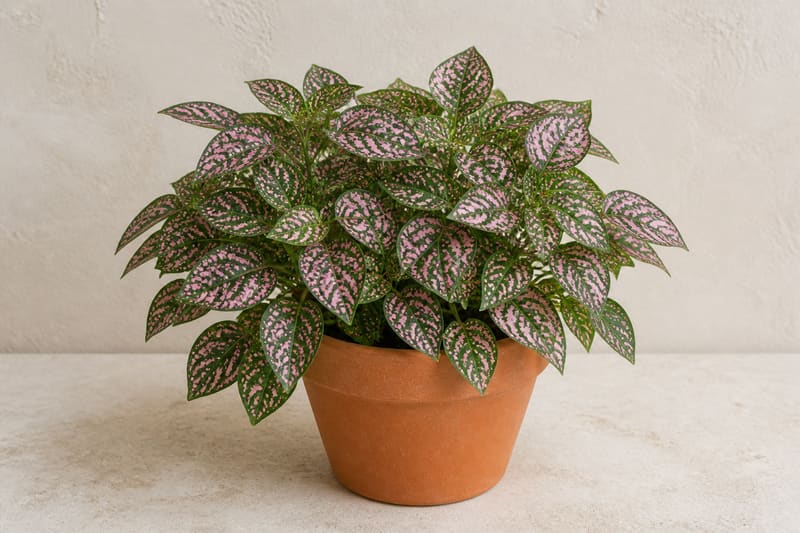
Identify Polka Dot Plant by its compact branching habit and opposite green leaves irregularly speckled pink, red, or white, then coordinate filtered light, steady moisture, warmth, and pinching.
Light
Bright to medium filtered light, protected from hot direct sun
Water
Let root zone dry
Soil
Clean moisture-distributing but freely draining houseplant mix in a proportional pot with an open drain
Temperature
Stable frost-free indoor warmth away from cold glass, heating vents, and abrupt temperature changes
Plant dossier
Plant overview
Polka Dot Plant is Hypoestes phyllostachya, a wet-tropical subshrub in Acanthaceae native to Madagascar. Its display comes from opposite ovate green leaves irregularly speckled or splashed with pink, red, or white.
Plant identification
Botanical characteristics
- Family
- Acanthaceae
- Native range
- Madagascar
- Growth habit
- compact wet-tropical subshrub with opposite ovate leaves marked by irregular colored speckles
- Care level
- Intermediate because filtered light, root moisture, warmth, humidity, and regular pinching must stay coordinated
- Common names
- Polka Dot Plant, Freckle Face, Measles Plant, Pink Splash, Flamingo Plant
- Propagation
- Node-bearing stem cuttings
- Pet safety
- ASPCA lists Polka Dot Plant as non-toxic to cats, dogs, and horses; ingestion may still cause mild vomiting or diarrhea, so pets should not be encouraged to chew it
- Scientific synonym
- Hypoestes sanguinolenta
Look for opposite leaf pairs on soft branching stems, an entire leaf margin, and irregular colored speckles spread across the blade rather than a network of colored veins. This separates it from Nerve Plant, whose main ornamental pattern follows the veins.
Before you choose
Is this plant a good fit?
A good fit for
- Bright rooms with filtered light
- Growers who can monitor root moisture
- Small spaces suited to compact patterned foliage
- Homes seeking an ASPCA-listed non-toxic ornamental
Think twice if
- Direct-sun windows
- Dry heating vents
- Pots without drainage
- Routines that allow repeated total dry-out
Care foundation
Care summary
Coordinate filtered light, even but aerated root moisture, stable warmth, supportive humidity, conservative feeding, pinching above healthy nodes, and an intentional decision about flower stems.
Detailed care
Read the conditions, not a calendar
Light
Provide bright to medium filtered light and protect the canopy from hot direct sun. Weak light produces longer new internodes and sparse growth; excessive exposure produces fixed pale or papery patches on the exposed side.
Watering
Check the surface and pot weight before the plant reaches a repeated total collapse. Water the occupied root ball evenly, allow excess to leave, and empty retained drainage. A wilt over heavy wet mix requires a root inspection rather than automatic watering.
Soil and pot
Use clean, structured houseplant mix in a proportional pot with an open drain. Avoid a large reservoir of unused wet mix, and keep the crown and branching stems at their established level.
Temperature and humidity
Maintain stable frost-free warmth away from cold glass, heaters, and vents. Measure humidity at leaf height. A humidifier, grouping, or suitable enclosure can create a stable change; misting produces only a brief effect.
Getting established
Your first 30 days
- 01
Days 1–3: confirm Hypoestes phyllostachya; photograph the speckled pattern, opposite leaves, branching stems, roots, and container.
- 02
Week 1: map filtered light, direct rays, humidity, forced air, pot weight, drainage, and visible pests.
- 03
Week 2: learn one moisture cycle without allowing repeated severe wilt or saturation.
- 04
Weeks 3–4: make one supported change and judge the next leaf pair, stem firmness, and root-zone behavior.
Growth and maintenance
Support the way it grows
Growth expectations
- Opposite speckled leaves expand from branching shoot tips
- Pinched healthy shoots can branch below the cut
- Small tubular lilac or pinkish flowers may appear but foliage remains the primary display
Seasonal changes
- Winter heating can sharply reduce humidity
- Lower seasonal light slows moisture use and growth
- Warm bright periods increase evaporation and direct-sun risk
Common mistakes
- Waiting for a complete dramatic wilt before every watering
- Keeping the pot permanently saturated
- Treating white speckles as pest evidence
- Placing the plant in hot direct sun
- Using misting instead of measuring humidity
Read the plant
Growth signals and practical checks
Healthy growth
- Flexible well-patterned new leaf pairs
- Short new internodes
- Firm branching stems
- Predictable moist-to-lighter pot cycle
- Clean active shoot tips
Warning signs
- Persistent collapse above wet mix
- Soft roots or stem bases
- Rapid yellow leaf loss
- Expanding wet lesions
- Webbing or cottony colonies
Common mistakes
- Waiting for a complete dramatic wilt before every watering
- Keeping the pot permanently saturated
- Treating white speckles as pest evidence
- Placing the plant in hot direct sun
- Using misting instead of measuring humidity
Practical notes
- Mark one shoot tip to compare future leaf pairs
- Read pot weight before posture prompts watering
- Remove flower spikes if compact foliage growth is the goal
Safety
Toxicity and safety
ASPCA lists Polka Dot Plant as non-toxic to cats, dogs, and horses, while noting that mild vomiting or diarrhea can occur. Prevent chewing and contact a veterinarian if an animal develops concerning signs.
Observation
Problems and observation
Check first
Map symptoms to established versus new leaf pairs, shoot tips, nodes, stem bases, roots, and container moisture. Magnification separates normal pale speckles from aphids, mealybugs, and whiteflies; pot weight separates dry wilt from wet-root decline.
Safe next action
Photograph one marked shoot tip, record pot weight after drainage, inspect the same three nodes, and note how long condensation remains. Change one supported variable, then judge clean new leaf pairs and root function.
04Open a related diagnosis
Frequently asked questions
Why does Polka Dot Plant faint or wilt so dramatically?
Its thin leaves and root zone respond quickly to water shortage, but a wet root-damaged plant can also wilt; check pot weight and roots before watering.
Should Polka Dot Plant flower spikes be removed?
RHS recommends removing flower stems as they appear when the goal is compact, colorful foliage growth.
Does misting provide enough humidity?
No. The humidity increase from misting is brief; measure conditions and use grouping, an enclosure, or a humidifier when a stable change is needed.
Is Polka Dot Plant safe around pets?
ASPCA lists Polka Dot Plant as non-toxic to cats and dogs, but pets should not be encouraged to chew plants and concerning symptoms need veterinary advice.