
Plant profile
Streptocarpus ionanthus
African Violet
Identify African Violet by its compact rosette, fuzzy rounded leaves, and flower clusters, then coordinate gentle light, room-temperature water, airy soil, warmth, and clean crown care.
Light
bright filtered or indirect
Water
use room-temperature water when the surface begins to dry, keep the crown dry, and drain fully
Soil
clean light free-draining African Violet or houseplant mix in a modest pot with an open drain
Temperature
stable indoor warmth around 18–24°C by day and no lower than about 16°C at night
Plant dossier
Plant overview
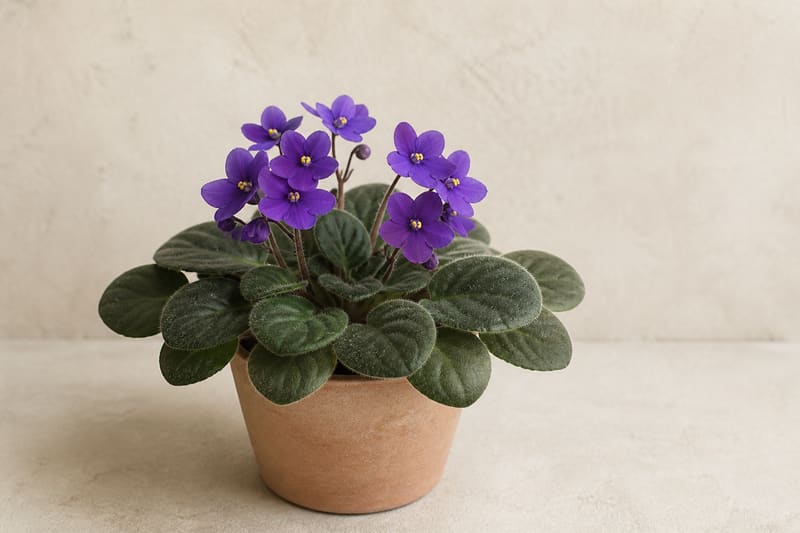
African Violet is Streptocarpus ionanthus, formerly Saintpaulia ionantha. It is a compact Tanzanian tropical flowering plant with a central rosette of softly hairy leaves and flower clusters held on slender stalks.
Plant identification
Botanical characteristics
- Family
- Gesneriaceae
- Native range
- Eastern and southwestern Tanzania
- Growth habit
- compact evergreen tropical flowering rosette with softly hairy leaves and upright flower clusters
- Care level
- moderate because flowering depends on gentle abundant light, stable warmth, careful moisture, clean airy mix, and an undamaged crown
- Common names
- African Violet, Saintpaulia, Usambara Violet
- Propagation
- Leaf cuttings, Division of multiple crowns
- Pet safety
- No species-specific pet-safety claim is made here; keep plant material out of reach and contact a veterinarian after suspected ingestion
- Scientific synonym
- Saintpaulia ionantha
Look for rounded to oval fuzzy leaves arranged from one crown, short fleshy petioles, and flowers held above the rosette. Cultivars vary widely in leaf color, rosette size, and single or double flowers, so use crown architecture and leaf texture rather than flower color alone.
Before you choose
Is this plant a good fit?
A good fit for
- Bright rooms with filtered light
- Small shelves and windowsills protected from harsh sun
- Growers who inspect a rosette and root zone
- Indoor flowering displays with stable warmth
Think twice if
- Cold drafty windows
- Containers without drainage
- Harsh afternoon sun
- Care routines that keep the crown and mix continuously wet
Care foundation
Care summary
Combine abundant filtered light, room-temperature water, an airy modest root zone, stable warmth, moderate humidity, light feeding during active growth, and clean removal of spent flowers.
Detailed care
Read the conditions, not a calendar
Light
Bright indirect or filtered light supports compact growth and flowering. Too little light lengthens petioles and suppresses flowers; intense direct sun can scorch fuzzy leaves. Measure conditions at the rosette and adjust gradually.
Watering
Check the mix surface and pot weight. Water at the mix with room-temperature water or from below, then allow complete drainage. Do not leave the pot standing in water, and avoid repeatedly wetting the crown, leaves, or flowers.
Soil and pot
Use clean light free-draining medium in a modest container with an open drain. Oversized or deep pots hold unused wet mix around a small root system. Preserve the original crown depth when repotting.
Temperature and humidity
Stable room warmth supports leaves and buds; cold glass, drafts, and cold irrigation water can injure sensitive tissue. Moderate humidity is useful, but spacing and dry flowers matter because stagnant wetness can favor disease.
Getting established
Your first 30 days
- 01
Days 1–3: confirm African Violet rather than a true Viola, inspect crown and leaf undersides, and verify drainage.
- 02
Week 1: map direct sun, bright indirect light, cold glass, vents, and day-night temperature at rosette level.
- 03
Week 2: learn one complete moisture cycle using pot weight and the mix surface.
- 04
Weeks 3–4: make one evidence-based change and judge a center leaf or flower stalk rather than old damage.
Growth and maintenance
Support the way it grows
Growth expectations
- New leaves emerge from the central crown
- A balanced rosette expands in concentric leaf rows
- Flower stalks rise above the leaves when conditions support blooming
Seasonal changes
- Winter light can reduce flowering and moisture use
- Warm brighter periods increase growth and bloom demand
- Heating and cold glazing create opposing edge and bud stress
Common mistakes
- Confusing African Violet with Viola species
- Pouring cold water across fuzzy leaves and crown
- Using an oversized wet pot
- Feeding a plant that lacks enough light or has failed roots
Read the plant
Growth signals and practical checks
Healthy growth
- Firm clean crown
- Symmetrical compact rosette
- Predictable moisture use and firm roots
- Flower stalks that open without distortion
Warning signs
- Soft dark center growth
- Persistently heavy mix with mushy roots
- Distorted tightly cupped crown leaves
- Multiplying wet lesions or gray fuzzy growth
Common mistakes
- Confusing African Violet with Viola species
- Pouring cold water across fuzzy leaves and crown
- Using an oversized wet pot
- Feeding a plant that lacks enough light or has failed roots
Practical notes
- View the rosette from directly above to detect one-sided stretch
- Use the next center leaf or flower stalk as a cleaner success signal than an old outer leaf
Safety
Toxicity and safety
This profile does not make an unsupported species-specific pet-safety claim. Keep plant material and potting inputs away from children and animals, and seek professional advice after ingestion.
Observation
Problems and observation
Check first
Map every symptom to the center crown, outer leaf ring, petiole contact point, flower stalk, or root zone. This distribution separates natural leaf aging, water rings, sun scorch, salt injury, mites, and rot.
Safe next action
Photograph the rosette from above, then record the crown, newest center leaf, oldest outer leaf, current flower stalk, pot weight, mix surface, drainage time, light direction, and day-night temperature. Mark existing spots before changing one supported variable, and use the next center leaf or flower stalk to judge the response.
04Open a related diagnosis
Frequently asked questions
Why is my African Violet not flowering?
Insufficient usable light is common, but root moisture, pot size, temperature, and nutrition must also support stable growth.
Can African Violet leaves get wet?
Cold water can leave pale rings, and prolonged wetness can favor disease; direct room-temperature water to the mix and keep the crown dry.
Is African Violet a true violet?
No. It is Streptocarpus ionanthus in Gesneriaceae, not a Viola in Violaceae.
How is African Violet propagated?
A healthy leaf and petiole can root in clean free-draining medium and form plantlets at its base.