
Plant profile
Phalaenopsis hybrids
Moth Orchid
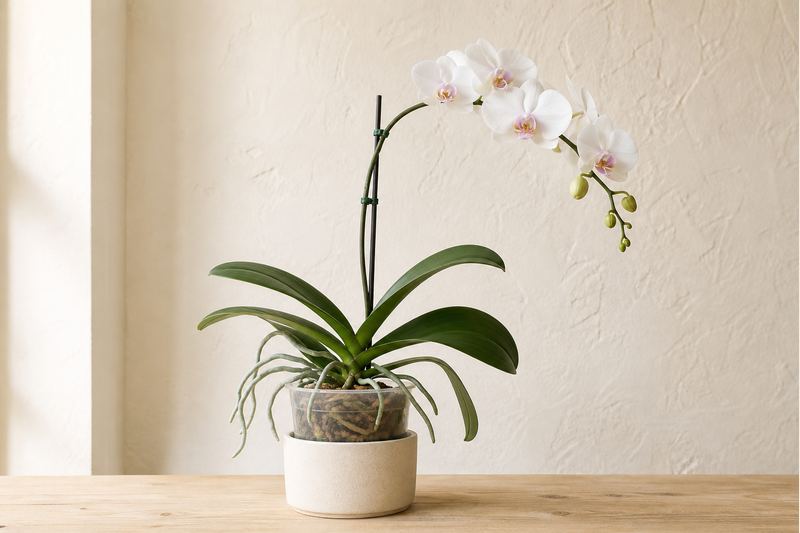
Identify a Moth Orchid by its monopodial crown, broad leathery leaves, aerial roots, and arching flower spikes, then make care decisions from root and bark evidence.
Light
bright filtered or indirect
Water
water bark and roots thoroughly as they approach dry, then drain fully and keep the crown dry
Soil
open bark-based orchid medium in a ventilated draining pot
Temperature
warm stable indoor conditions, generally above 60°F (16°C)
Plant dossier
Plant overview
Moth Orchid is the practical houseplant name for cultivated Phalaenopsis. Most supermarket and garden-center plants are unnamed hybrids, not verified specimens of Phalaenopsis amabilis. This page therefore uses the genus-level cultivated entity while Kew's accepted P. amabilis record supplies a documented species reference and native-range context.
Plant identification
Botanical characteristics
- Family
- Orchidaceae
- Native range
- Cultivated hybrids derived from tropical Asian and Australasian Phalaenopsis species
- Growth habit
- monopodial evergreen epiphytic orchid
- Care level
- approachable when root aeration, filtered light, and crown dryness are observed
- Common names
- Moth Orchid, Phalaenopsis Orchid, Moon Orchid
- Propagation
- Naturally formed keiki with established roots, Laboratory seed or tissue culture
- Pet safety
- ASPCA lists Phalaenopsis orchids as non-toxic to cats and dogs, although chewing plant material can still cause gastrointestinal upset
Look for a short central stem hidden by overlapping leaf bases, broad leathery leaves arranged from one crown, thick silvery or green aerial roots, and an arching flower spike emerging from a leaf axil. Phalaenopsis is monopodial and lacks the pseudobulbs seen on many sympodial orchids.
Before you choose
Is this plant a good fit?
A good fit for
- Bright filtered windows
- Growers who can inspect roots and bark
- Homes seeking a pet-safer flowering plant
Think twice if
- Dense ordinary potting soil
- Cold drafty rooms
- Growers who water every plant on one fixed schedule
Care foundation
Care summary
Coordinate bright filtered light, warm conditions, an airy bark-based root zone, thorough drainage, modest feeding during active growth, and prompt crown drying.
Detailed care
Read the conditions, not a calendar
Light
Bright filtered light supports leaves and flowering. Very dark stiff leaves on an otherwise healthy plant can accompany insufficient light; hot direct sun can bleach or scorch exposed tissue. Change exposure gradually.
Watering
Read both bark and roots. Water with room-temperature water as bark approaches dry and firm roots become silver, then drain completely. Do not substitute misting or ice for complete root-zone watering, and do not leave water in the central crown.
Soil and pot
Use open orchid bark or another Phalaenopsis-appropriate medium in a ventilated pot. Dense houseplant soil excludes air. Replace medium when it breaks down or root health requires intervention, not solely because flowers have fallen.
Temperature and humidity
Warm household temperatures generally suit Moth Orchids. Protect buds and foliage from cold drafts and heating vents. Moderate humidity can help, but stagnant wet leaves and roots increase disease risk; pair humidity with air movement.
Getting established
Your first 30 days
- 01
Days 1–3: confirm the plant is Phalaenopsis, inspect the clear pot, and record flower and root condition.
- 02
Week 1: learn root color and bark weight before and after watering.
- 03
Week 2: keep the crown dry and avoid unnecessary repotting while flowers are stable.
- 04
Weeks 3–4: make one evidence-based placement or watering adjustment and judge roots and the next leaf.
Growth and maintenance
Support the way it grows
Growth expectations
- Leaves emerge one at a time from the central crown
- Thick aerial roots may grow outside the pot
- Flower spikes emerge from leaf axils and can branch
Seasonal changes
- Short cool days extend bark dry-down
- Warm bright periods increase water use and scorch risk
Common mistakes
- Watering with ice cubes
- Cutting healthy aerial roots
- Using ordinary houseplant soil
- Leaving water trapped in the crown
Read the plant
Growth signals and practical checks
Healthy growth
- Firm green or silver roots with active green tips
- A firm newest leaf and dry central crown
- Bark that wets and drains without remaining stagnant
Warning signs
- Soft dark crown tissue
- Brown mushy or hollow roots throughout the pot
- Rapidly spreading water-soaked leaf lesions
Common mistakes
- Watering with ice cubes
- Cutting healthy aerial roots
- Using ordinary houseplant soil
- Leaving water trapped in the crown
Practical notes
- Use a clear pot to separate bark moisture from root health
- Distinguish a rounded green root tip from a flatter flower-spike tip before cutting
Safety
Toxicity and safety
ASPCA lists Phalaenopsis orchids as non-toxic to cats and dogs. That classification does not mean plant material is food: chewing can still cause gastrointestinal upset or a physical obstruction, so contact a veterinarian when an animal is unwell.
Observation
Problems and observation
Check first
Yellowing, wrinkles, failed buds, brown spots, and missing flowers are observations. Map whether the evidence begins in an oldest leaf, newest crown tissue, visible root, flower spike, or bud before diagnosing.
Safe next action
Record root color, firmness, bark condition, crown dryness, newest leaf, spike state, and the exact window exposure. Change one factor and use a new root tip, leaf, or spike as the response.
04Open a related diagnosis
Frequently asked questions
Is every store-bought orchid Phalaenopsis amabilis?
No. Most retail Moth Orchids are unnamed Phalaenopsis hybrids; use a verified label before assigning a species or cultivar name.
Are Moth Orchids safe for cats and dogs?
ASPCA lists Phalaenopsis orchids as non-toxic to cats and dogs, but chewing any plant material may still cause stomach upset.
Should I cut aerial roots?
Keep firm aerial roots. Remove only roots confirmed dead during a justified repotting.
Can I water a Moth Orchid with ice cubes?
Use room-temperature water and judge timing from bark and roots; ice is not required and cold water can stress tropical orchid tissue.