
Plant profile
Peperomia obtusifolia
Baby Rubber Plant
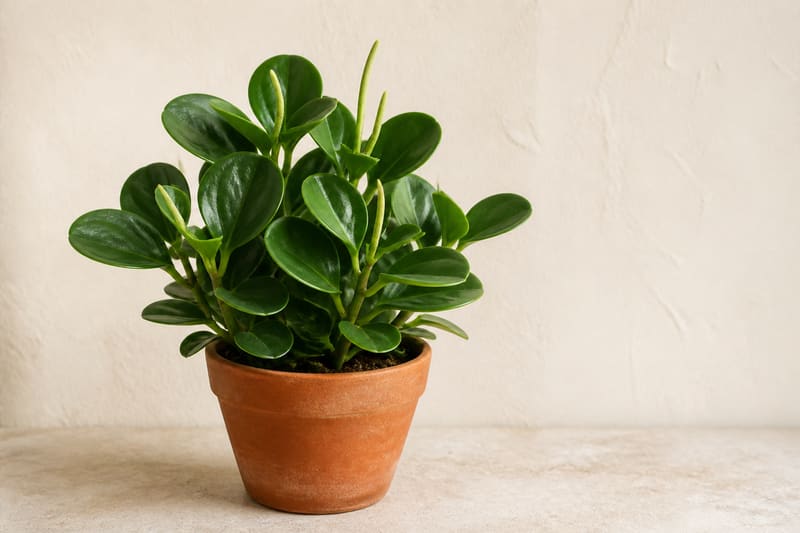
Identify Peperomia obtusifolia by its compact fleshy stems, glossy blunt-tipped leaves, and slender flower spikes, then coordinate light, moisture, and root aeration.
Light
bright indirect or filtered light, with protection from abrupt hot sun
Water
water after much of the occupied root zone dries, then drain completely
Soil
loose well-drained houseplant mix with durable air space
Temperature
Warm, draft-free
Plant dossier
Plant overview
Peperomia obtusifolia is an accepted Piperaceae perennial or epiphyte native from Florida through tropical America. Indoors it forms a compact branching plant with fleshy stems, thick water-storing leaves, and slender spike-like inflorescences.
Plant identification
Botanical characteristics
- Family
- Piperaceae
- Native range
- Florida, Mexico, Central America, the Caribbean, and tropical South America
- Growth habit
- evergreen tropical herb or epiphyte with compact fleshy branching stems
- Care level
- straightforward when bright filtered light, aerated soil, and measured dry-down are provided
- Common names
- Baby Rubber Plant, American Rubber Plant, Oval Leaf Peperomia, Pepper Face
- Propagation
- Stem cuttings, Leaf cuttings
- Pet safety
- ASPCA lists Peperomia obtusifolia as non-toxic to dogs and cats
- Scientific synonyms
- Piper obtusifolium, Rhynchophorum obtusifolium
Look for smooth glossy obovate leaves with rounded blunt tips on distinct fleshy branching stems. Cream-green flowers are minute and densely arranged on slender upright spikes. Do not confuse this compact peperomia with Ficus elastica, whose much larger elongated leaves and sheathed new growth belong to a different family.
Before you choose
Is this plant a good fit?
A good fit for
- Bright filtered windows
- Compact desktops and shelves
- Pet-aware homes seeking an ASPCA-listed non-toxic plant
Think twice if
- Sealed pots
- Harsh unacclimated summer sun
- Cold drafty positions
Care foundation
Care summary
Coordinate bright filtered light, gradual acclimation, a loose draining mix, evidence-based watering, conservative feeding during active growth, moderate humidity with airflow, and protection from temperature extremes.
Detailed care
Read the conditions, not a calendar
Light
Bright filtered light keeps growth compact. Deep shade can produce weak stretched growth, while abrupt direct summer sun can scorch thick leaves. Increase exposure gradually and judge the next internodes rather than old stretched stems.
Watering
Allow much of the occupied root zone to dry before a complete watering and empty runoff. Reduce frequency in cool low-light periods. The plant dislikes both prolonged wetness and extreme dryness, so combine pot weight, deeper moisture, and leaf firmness.
Soil and pot
Use a loose well-drained houseplant mix in a container with an open drainage hole. Keep pot volume proportional to the roots so unused wet mix does not stay saturated after the occupied zone has dried.
Temperature and humidity
Maintain warm stable indoor conditions, moderate humidity, and air movement without cold drafts or direct radiator heat. RHS advises keeping peperomias above 10°C; temperature and light changes also alter how quickly the pot dries.
Getting established
Your first 30 days
- 01
Days 1–3: confirm blunt-tipped glossy leaves, fleshy branching stems, pot drainage, soil moisture, and window exposure.
- 02
Week 1: avoid watering until deeper dry-down is verified.
- 03
Week 2: improve filtered light only in stages and record existing marks.
- 04
Weeks 3–4: make one evidence-based adjustment and judge the next leaves.
Growth and maintenance
Support the way it grows
Growth expectations
- Rounded obovate leaves expand along fleshy branching stems
- Compact growth may spread or trail with age
- Mature plants may produce slender cream-green flower spikes
Seasonal changes
- Lower winter light slows water use
- Summer direct sun requires acclimation and filtering
- Cold drafts increase stress
Common mistakes
- Weekly calendar watering
- Keeping the plant too far from a window
- Using dense soil
- Pruning before correcting low light
Read the plant
Growth signals and practical checks
Healthy growth
- Closely spaced glossy leaves
- Firm continuous stems and pale healthy roots
- Predictable wet-to-dry soil cycle
Warning signs
- Soft dark stem base
- Loose stems in wet soil
- Rapidly expanding wet leaf lesions
Common mistakes
- Weekly calendar watering
- Keeping the plant too far from a window
- Using dense soil
- Pruning before correcting low light
Practical notes
- Compare new internode length with older compact growth
- Use pot weight and deeper moisture rather than surface color alone
Safety
Toxicity and safety
ASPCA lists Baby Rubber Plant as non-toxic to dogs and cats. Non-toxic does not mean edible: discourage chewing and contact a veterinarian after concerning symptoms or an uncertain plant identification.
Observation
Problems and observation
Check first
Leaf drop, yellowing, wrinkles, softness, spots, and long internodes are observations. Map texture, position, spread, soil moisture, and recent environmental change before diagnosing.
Safe next action
Record pot weight, deeper moisture, leaf firmness, new internode length, branch direction, and exact window exposure. Change one variable and use the next opposite leaf pair as the response.
04Open a related diagnosis
Frequently asked questions
Is Piper obtusifolium a different plant?
Kew lists Piper obtusifolium as a synonym of the accepted Peperomia obtusifolia.
Is Baby Rubber Plant safe for cats and dogs?
ASPCA lists Peperomia obtusifolia as non-toxic to dogs and cats, although chewing any plant material can still cause stomach upset.
Is Baby Rubber Plant the same as Rubber Plant?
No. Baby Rubber Plant is Peperomia obtusifolia in Piperaceae; Rubber Plant is Ficus elastica in Moraceae.
Can Baby Rubber Plant grow from a leaf?
Yes. A healthy intact leaf can root after its wound dries, although stem cuttings establish a larger plant faster.