
Plant profile
Aglaonema spp.
Chinese Evergreen
Identify Chinese Evergreen as an Aglaonema cultivar group, distinguish natural variegation from damage, and use observable care signals.
Light
filtered or indirect
Water
Let upper mix dry
Soil
aerated moisture-retentive but well-drained houseplant mix
Temperature
Warm, draft-free
Plant dossier
Plant overview
Chinese Evergreen is the houseplant name for Aglaonema species, hybrids and cultivars in the aroid family. Because foliage color and pattern differ widely, keep a cultivar label when one is available instead of forcing every plant into a single species.
Plant identification
Botanical characteristics
- Family
- Araceae
- Native range
- tropical and subtropical Asia to New Guinea; exact range depends on species and cultivar parentage
- Growth habit
- clump-forming evergreen tropical aroid grown for patterned foliage
- Care level
- beginner-friendly with cultivar-dependent light needs
- Common names
- Chinese Evergreen, Aglaonema, Philippine Evergreen
- Propagation
- Division, Stem cuttings
- Pet safety
- Contains calcium oxalate crystals; keep away from pets and children who may chew it, and protect skin and eyes from sap
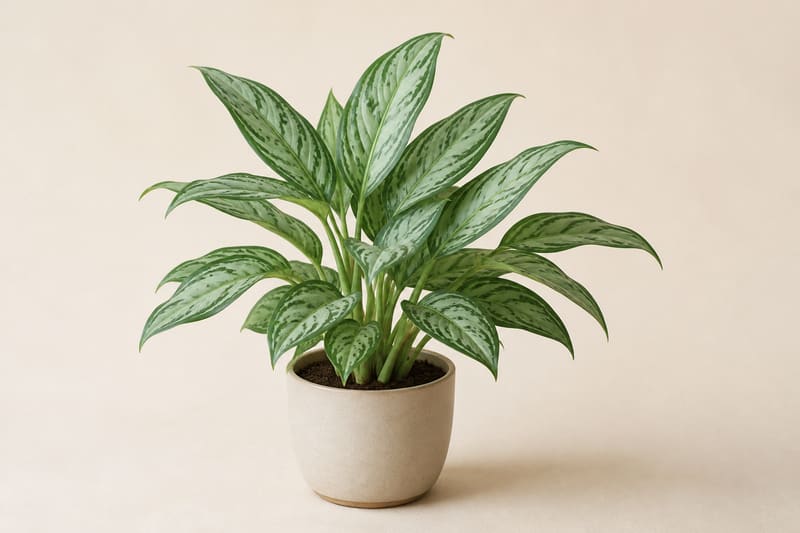
Look for a dense clump of short, leaf-scarred canes or basal shoots carrying glossy elliptic to lance-shaped leaves. Green, silver, cream, pink or red patterning is cultivar-dependent. Chinese Evergreen generally has fewer strong lateral veins than Dieffenbachia and lacks the white sail-like flower display associated with Peace Lily foliage.
Before you choose
Is this plant a good fit?
A good fit for
- Filtered-light rooms
- Growers who can observe root-zone moisture
- Homes needing a compact foliage plant
Think twice if
- Homes where pets or children may chew foliage
- Cold drafty locations
- Containers without drainage
Care foundation
Care summary
Coordinate cultivar-appropriate filtered light, root-zone drying, open drainage and conservative feeding during active growth. Do not use a fixed watering day.
Detailed care
Read the conditions, not a calendar
Light
Green cultivars tolerate lower light better than many houseplants, but low light still slows growth. More highly variegated forms generally need brighter indirect light to maintain pattern. Introduce stronger exposure gradually because direct sun can bleach or scorch leaves.
Watering
Check below the surface and compare pot weight. Water thoroughly once the upper root zone has dried, drain completely and adjust timing as light, season and pot volume change.
Soil and pot
Use structured houseplant mix that retains some moisture but still admits air and drains freely. Increase pot size modestly only when roots or wetting behavior justify it.
Temperature and humidity
Warm stable indoor conditions are preferable. Protect the plant from cold drafts; extra humidity cannot compensate for saturated roots or insufficient usable light.
Getting established
Your first 30 days
- 01
Days 1–3: confirm identity, drainage and filtered light.
- 02
Week 1: record wet pot weight and existing marks.
- 03
Week 2: inspect leaf undersides and stem joints.
- 04
Weeks 3–4: make one evidence-based change only if needed.
Growth and maintenance
Support the way it grows
Growth expectations
- Center leaves emerge rolled and open gradually
- Rooted basal shoots thicken the clump
- Older canes become marked by leaf scars
Seasonal changes
- Short cool days extend dry-down
- Strong summer windows increase scorch risk for exposed foliage
Common mistakes
- Treating all Aglaonema cultivars as one exact species
- Confusing stable silver variegation with damage
- Watering on a fixed weekday
Read the plant
Growth signals and practical checks
Healthy growth
- New leaves open without distortion
- Cultivar pattern remains consistent on new growth
- The pot completes a predictable dry-down
Warning signs
- Soft dark roots with persistent wetness
- Softening cane bases
- Confirmed mealybug or scale evidence
Common mistakes
- Treating all Aglaonema cultivars as one exact species
- Confusing stable silver variegation with damage
- Watering on a fixed weekday
Practical notes
- Count individual canes and basal shoots before diagnosing the whole clump
- Compare new color with the same cultivar rather than another Aglaonema
Safety
Toxicity and safety
Aglaonema tissues contain calcium oxalate crystals. Wear gloves when cutting or dividing, avoid eye and mouth contact, and keep the plant and cut material away from pets and children who may chew it.
Observation
Problems and observation
Check first
Yellowing, brown tips, drooping, curling and slow growth are observations, not diagnoses. First distinguish stable cultivar pattern from a new change, then combine affected shoots, leaf age, texture, pot moisture and direct root or pest evidence.
Safe next action
Record the newest center leaf, oldest leaf on each cane, basal shoots, crowded petiole bases and pot weight. Change one variable and compare the next leaf cycle.
04Open a related diagnosis
Frequently asked questions
Does Chinese Evergreen refer to one species?
Not reliably. The houseplant name covers several Aglaonema species, hybrids and cultivars, so retain the cultivar label when available.
Is Chinese Evergreen safe for pets?
No. Aglaonema contains calcium oxalate crystals and should be kept away from pets and children who may chew it.
Is silver patterning a disease symptom?
Usually not when it is stable and matches the cultivar. New spreading yellow, brown or stippled tissue needs separate diagnosis.