
Plant profile
Zamioculcas zamiifolia
ZZ Plant
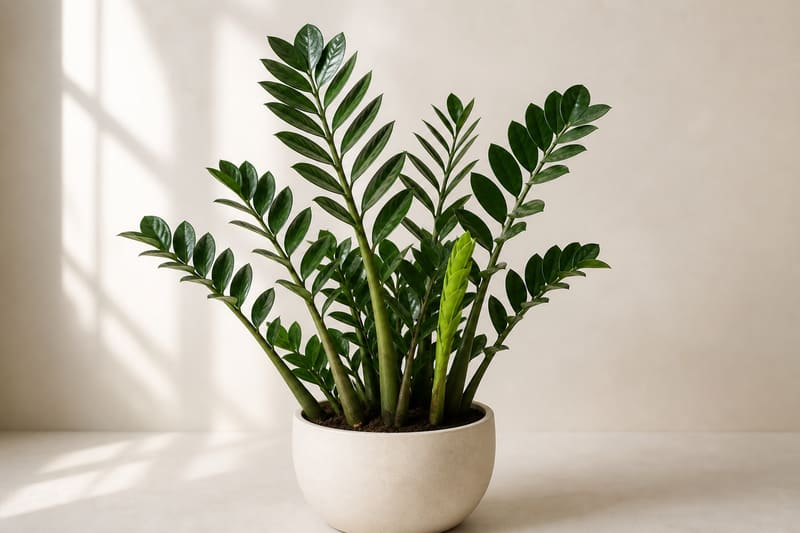
Identify ZZ Plant by upright pinnate leaves, glossy leaflets and water-storing rhizomes, then use observable care signals.
Light
bright indirect light for stronger growth
Water
allow substantial dry-down before thorough watering
Soil
structured well-drained indoor potting mix
Temperature
Warm, draft-free
Plant dossier
Plant overview
ZZ Plant is Zamioculcas zamiifolia, a slow rhizomatous aroid native to eastern tropical Africa. Zanzibar gem, eternity plant and aroid palm are aliases, not separate species pages.
Plant identification
Botanical characteristics
- Family
- Araceae
- Native range
- eastern tropical Africa
- Growth habit
- rhizomatous evergreen herbaceous perennial
- Care level
- easy
- Common names
- ZZ plant, Zanzibar gem, Eternity plant, Aroid palm
- Propagation
- Division, Leaflet cuttings
- Pet safety
- Harmful if eaten and a skin or eye irritant because it contains calcium oxalates
Each apparent stem is a pinnately compound leaf: a thick petiole and rachis carrying paired glossy oval leaflets. New leaves emerge as light-green spears and darken as they mature.
Before you choose
Is this plant a good fit?
A good fit for
- Rooms with indirect light
- Growers who can wait for dry-down
- People wanting a slow upright foliage plant
Think twice if
- Homes where pets or children may chew foliage
- Containers without drainage
- Fixed frequent watering
Care foundation
Care summary
Use indirect light, substantial dry-down, open drainage and restrained feeding. Let evidence determine watering rather than a fixed monthly promise.
Detailed care
Read the conditions, not a calendar
Light
Low-light tolerance is not a claim that the plant thrives in darkness. Bright indirect light supports stronger performance; introduce it gradually to avoid sun scorch.
Watering
Rhizomes store water, so saturation is a major risk. Check pot weight and below-surface moisture, water evenly after substantial dry-down and remove runoff.
Soil and pot
Use a structured mix and open drainage. A snug pot is acceptable until rhizomes distort it or the wetting pattern fails; increase size modestly.
Temperature and humidity
Warm indoor conditions are suitable away from cold drafts. Average household humidity is adequate; misting cannot repair wet roots or poor light.
Getting established
Your first 30 days
- 01
Days 1–3: confirm identity, drainage and indirect light.
- 02
Week 1: record pot weight and existing damage.
- 03
Week 2: inspect leaflet undersides and petiole bases.
- 04
Weeks 3–4: make one evidence-based change.
Growth and maintenance
Support the way it grows
Growth expectations
- New compound leaves emerge as pale green spears
- Leaflets darken as they mature
- Thick underground rhizomes expand slowly
Seasonal changes
- Short cool days extend dry-down
- Strong window sun can scorch after an abrupt move
Common mistakes
- Treating low-light tolerance as a need for darkness
- Watering monthly without checking
- Feeding heavily to force growth
Read the plant
Growth signals and practical checks
Healthy growth
- Rhizomes remain firm
- New leaflets open cleanly
- The pot completes a predictable dry-down
Warning signs
- Soft dark roots or rhizomes
- Persistent wetness with yellowing
- Collapsing petiole bases
Common mistakes
- Treating low-light tolerance as a need for darkness
- Watering monthly without checking
- Feeding heavily to force growth
Practical notes
- A new shoot is naturally lighter before it hardens
- Each apparent stem is usually a compound leaf
Safety
Toxicity and safety
University of Florida and RHS describe ZZ Plant as harmful if eaten because of calcium oxalates, with skin or eye irritation possible. Keep it out of reach.
Observation
Problems and observation
Check first
Yellowing, drooping, browning and slow growth are observations. Read leaf age, texture, base firmness, pot weight and exposure together.
Safe next action
Record the newest shoot, oldest leaf, petiole bases and pot weight. Make one correction and compare the next cycle.
04Open a related diagnosis
Frequently asked questions
Is ZZ Plant safe for pets?
No. It contains calcium oxalates and is harmful if eaten.
Can ZZ Plant grow in a dark room?
It tolerates low light, but bright indirect light supports better growth.
Is Zanzibar gem the same as ZZ Plant?
Yes, it is a common-name alias.