
Plant profile
Strelitzia reginae
Bird of Paradise
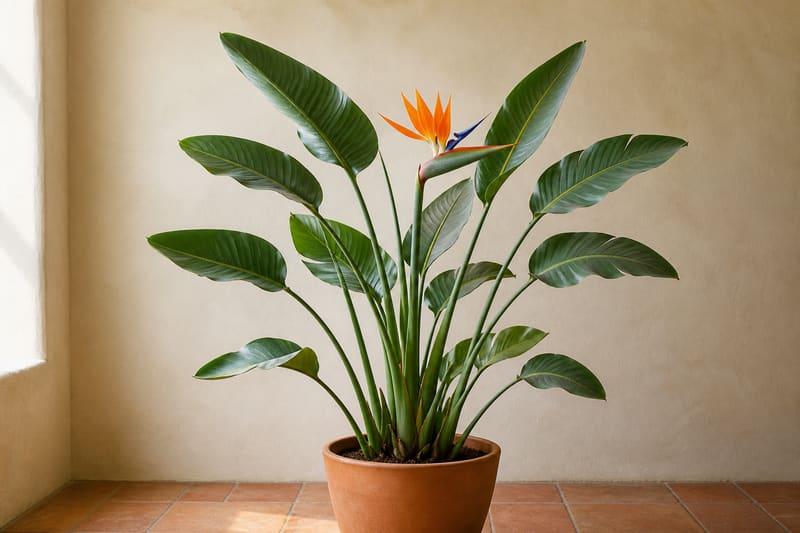
Identify Strelitzia reginae by its rhizomatous clump, long-stalked paddle leaves, and orange-blue flowers, then coordinate light, seasonal water, warmth, and space.
Light
abundant bright light, with stronger direct exposure introduced gradually
Water
keep evenly moist but not saturated during active growth, then water more sparingly in winter
Soil
fertile loam-based peat-free container mix with added drainage
Temperature
warm conditions, protected from temperatures below about 10–12°C and from abrupt cold
Plant dossier
Plant overview
Bird of Paradise is Strelitzia reginae, an accepted South African evergreen perennial grown for clumps of large grey-green paddle leaves and orange-blue flowers emerging from a boat-shaped spathe.
Plant identification
Botanical characteristics
- Family
- Strelitziaceae
- Native range
- South Africa, from the Cape Provinces to KwaZulu-Natal
- Growth habit
- tender evergreen rhizomatous perennial forming clumps of long-petioled paddle leaves and orange-blue bird-like flowers
- Care level
- moderate because indoor plants need abundant light, substantial space, warm conditions, seasonal water adjustment, and maturity before flowering
- Common names
- Bird of Paradise, Bird of Paradise Flower, Crane Flower, Bird's Tongue Flower
- Propagation
- Division of rooted suckers, Seed
- Pet safety
- ASPCA lists Strelitzia reginae as toxic to dogs, cats, and horses; fruit and seeds are the main concern and can cause mild nausea, vomiting, and drowsiness
- Scientific synonym
- Strelitzia regalis
Look for multiple leaf fans rising from an underground rhizome. Each broad oval blade sits on a long stiff petiole and carries parallel-arching veins. Mature flowering plants produce orange and vivid blue structures from a horizontal beak-like bract.
Before you choose
Is this plant a good fit?
A good fit for
- Large very bright rooms
- Warm conservatories
- Growers with space for a broad mature clump
- People willing to wait for flowering maturity
Think twice if
- Dark corners
- Small narrow spaces
- Cold unheated rooms
- Homes unable to keep toxic fruits and seeds away from pets
Care foundation
Care summary
Coordinate abundant light, steady warmth, moderate humidity, generous active-season watering, more sparing winter water, free drainage, and regular feeding while growth is active.
Detailed care
Read the conditions, not a calendar
Light
Abundant bright light supports strong leaves and flowering potential. Acclimate a shade-grown plant gradually before exposing it to stronger sun, and distinguish a sharp scorch boundary from the natural splitting of mature blades.
Watering
Check the upper half-inch to inch of mix and compare pot weight. When watering is justified, wet the occupied root ball evenly and discard runoff. Avoid prolonged dryness as well as persistent saturation, both of which can contribute to leaf loss.
Soil and pot
Use a fertile, light, freely draining peat-free mix in a container with an open drain. Increase pot size modestly only when roots have filled the existing container.
Temperature and humidity
Maintain stable warmth and protect the plant from cold glass, drafts, and rapid transitions. Moderate-to-high humidity can support foliage, but do not keep leaves continuously wet or substitute misting for root-zone care.
Getting established
Your first 30 days
- 01
Days 1–3: confirm Strelitzia reginae rather than S. nicolai, inspect each fan and both leaf surfaces, and verify drainage.
- 02
Week 1: map direct-light hours, drafts, clearance, and temperature at leaf height.
- 03
Week 2: record pot weight, deeper moisture, drain time, and existing splits or edges.
- 04
Weeks 3–4: make one supported adjustment and judge the newest spear and petiole firmness.
Growth and maintenance
Support the way it grows
Growth expectations
- New paddle leaves emerge as central spears from rhizome fans
- Mature clumps expand through rooted suckers
- Flowering may require five years or more and substantial size
Seasonal changes
- Spring and summer support stronger watering and feeding
- Winter calls for more sparing water
- Outdoor summer moves require light acclimation and shelter from wind
Common mistakes
- Confusing S. reginae with larger white bird of paradise
- Expecting a juvenile plant to flower
- Watering on a fixed calendar
- Cutting healthy naturally split leaves
Read the plant
Growth signals and practical checks
Healthy growth
- Firm upright petioles
- Broad grey-green blades
- Active central spears
- Predictable seasonal root-zone moisture
Warning signs
- A soft discolored rhizome crown
- Persistently wet mix with soft dark roots
- Webbing scale covers or mealybug colonies
Common mistakes
- Confusing S. reginae with larger white bird of paradise
- Expecting a juvenile plant to flower
- Watering on a fixed calendar
- Cutting healthy naturally split leaves
Practical notes
- Keep functional split leaves rather than reshaping them
- Judge flowering only after confirming species age size and light
Safety
Toxicity and safety
ASPCA lists Bird of Paradise Flower as toxic to dogs, cats, and horses, with fruit and seeds causing mild nausea, vomiting, and drowsiness. Keep reproductive material away from pets and seek veterinary advice after suspected ingestion.
Observation
Problems and observation
Check first
Map each change to leaf age, the bright side, one branch, or the whole canopy. Review recent moves, cold exposure, pot moisture, and pest evidence before choosing a correction.
Safe next action
Record the same fan, newest spear, petiole angle, split boundary, pot weight, deeper moisture, drain time, leaf temperature, light direction, and both blade surfaces. Change one supported variable and compare healthy new growth rather than expecting old damage to reverse.
04Open a related diagnosis
Frequently asked questions
Why are my Bird of Paradise leaves splitting?
Clean tears often follow parallel veins naturally or after wind and contact; investigate when new leaves emerge distorted or shredding accelerates.
Why is my Bird of Paradise not flowering?
Confirm Strelitzia reginae, substantial maturity, abundant light, healthy roots, and adequate feeding before expecting flowers.
Is Bird of Paradise safe around pets?
ASPCA lists Strelitzia reginae as toxic to dogs, cats, and horses; fruit and seeds are the main concern.
Can Bird of Paradise grow from a leaf?
Divide a rooted sucker from a mature clump or raise plants from prepared seed; a detached leaf or petiole cannot form a new rhizome.