
Plant profile
Chamaedorea elegans
Parlor Palm
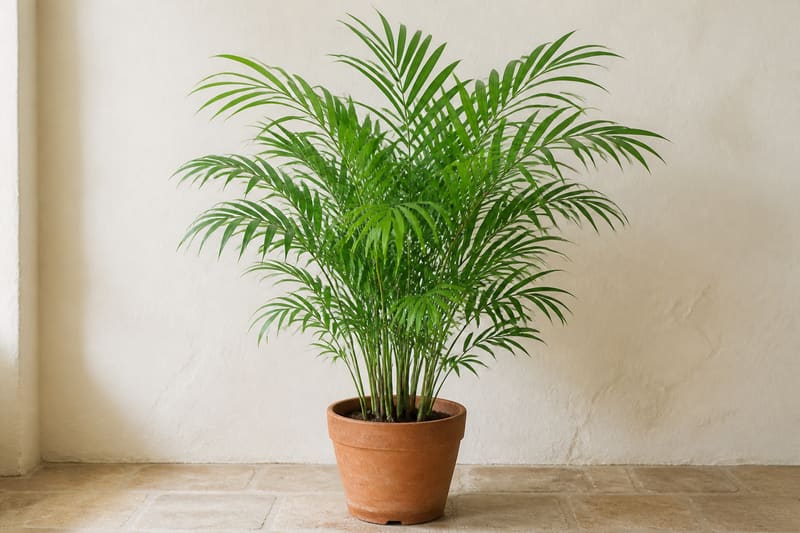
Identify Parlor Palm by its slender green stems and fine pinnate fronds, then coordinate indirect light, measured watering, drainage, warmth, and slow growth.
Light
bright indirect light to light shade, protected from strong direct sun
Water
Let upper mix dry
Soil
humus-rich peat-free container mix with reliable aeration and drainage
Temperature
Warm, draft-free
Plant dossier
Plant overview
Parlor Palm is the accepted species Chamaedorea elegans, a slow-growing understory palm native from Mexico to Honduras. It carries fine, arching pinnate fronds on slender green stems and adapts well to indoor indirect light.
Plant identification
Botanical characteristics
- Family
- Arecaceae
- Native range
- Mexico to Honduras
- Growth habit
- slow-growing evergreen understory palm with slender solitary stems and pinnate fronds
- Care level
- easy to moderate because it tolerates light shade but still needs drainage, stable warmth, and measured watering
- Common names
- Parlor Palm, Parlour Palm, Neanthe Bella Palm, Good Luck Palm
- Propagation
- Seed, Division of verified separately rooted seedlings
- Pet safety
- ASPCA lists Chamaedorea elegans as non-toxic to dogs and cats
- Scientific synonyms
- Neanthe bella, Collinia elegans, Chamaedorea pulchella
Look for narrow linear leaflets arranged in pairs along arching fronds, smooth slender green stems, and a compact upright-to-vase habit. A full nursery pot usually combines several individual seedlings even though the species naturally produces a solitary stem.
Before you choose
Is this plant a good fit?
A good fit for
- Rooms with bright indirect light or light shade
- Growers who prefer a slow-growing palm
- Smaller indoor spaces
- Pet households seeking an ASPCA-listed non-toxic plant
Think twice if
- Strong direct-sun windows
- Sealed pots that retain runoff
- Cold exterior-door drafts
- Buyers expecting rapid height growth
Care foundation
Care summary
Coordinate bright indirect light, slight upper-zone dry-down, complete watering with drainage, stable warmth, moderate humidity, restrained feeding, and protection of every stem's growing point.
Detailed care
Read the conditions, not a calendar
Light
Bright indirect light supports the strongest compact growth. Light shade is tolerated, but deep shade slows an already slow palm. Strong direct sun can bleach and scorch the exposed side.
Watering
Let the upper mix dry slightly, verify pot weight and deeper moisture, then water the entire root ball and remove runoff. Use less frequent irrigation as winter light and growth decline.
Soil and pot
Use a humus-rich, freely draining peat-free container mix and a pot with an open drain. Do not bury slender stem bases or move a small root system into an oversized container.
Temperature and humidity
Stable warm conditions and moderate humidity protect fine leaflets. Avoid cold glass, door drafts, hot vents, and continuous wetting of foliage.
Getting established
Your first 30 days
- 01
Days 1–3: confirm the species, count individual stems, inspect leaflet undersides, and verify drainage.
- 02
Week 1: record indirect light and learn the upper-mix dry-down signal.
- 03
Week 2: compare each stem base, the emerging spear, pot weight, and runoff.
- 04
Weeks 3–4: make one supported adjustment and judge the next opening spear.
Growth and maintenance
Support the way it grows
Growth expectations
- New fronds emerge as folded spears from individual stems
- Retail pots often contain several separate seedlings
- Mature plants may produce small yellow flowers
Seasonal changes
- Winter lower light slows water use and growth
- Strong summer sun can scorch exposed leaflets
- Heating airflow can increase tip browning
Common mistakes
- Treating low-light tolerance as no-light growth
- Leaving the pot in runoff
- Cutting the central growing point
- Assuming every stem in a crowded pot shares one root system
Read the plant
Growth signals and practical checks
Healthy growth
- Firm slender green stems
- Gradually opening green spear
- Evenly colored narrow leaflets
- Predictable slightly-dry-to-watered root-zone cycle
Warning signs
- Loose stems in persistently wet mix
- Soft dark roots with odor
- Fine webbing and spreading stippling
Common mistakes
- Treating low-light tolerance as no-light growth
- Leaving the pot in runoff
- Cutting the central growing point
- Assuming every stem in a crowded pot shares one root system
Practical notes
- Track each stem separately in a multi-seedling pot
- Use the next opening spear as the primary growth record
Safety
Toxicity and safety
ASPCA lists Chamaedorea elegans as non-toxic to dogs and cats. N.C. State notes that rare fruit juice may irritate sensitive human skin, so keep fruits and treated plant material out of reach.
Observation
Problems and observation
Check first
Map damage to leaflet tips, the window-facing side, one frond, one stem, or the whole clump. That distribution separates dryness, sun, normal aging, root failure, and pests.
Safe next action
Record the emerging spear, stem firmness, pot weight, deeper moisture, drain time, light direction, and leaflet undersides. Make one change and use the next spear as the response.
04Open a related diagnosis
Frequently asked questions
Is Parlor Palm safe for cats and dogs?
ASPCA lists Chamaedorea elegans as non-toxic to dogs and cats; keep rare fruits and all treated plant material out of reach.
Can Parlor Palm grow in low light?
It tolerates light shade, but bright indirect light supports stronger growth; no plant grows in a windowless dark room without suitable artificial light.
Why are several stems planted together?
Chamaedorea elegans is naturally solitary, so growers commonly combine several seedlings to create a fuller retail pot.
Can I cut the top to control height?
No. A palm stem relies on its growing point; remove only fully dead fronds without cutting the central spear.