
Plant profile
Ficus lyrata
Fiddle Leaf Fig
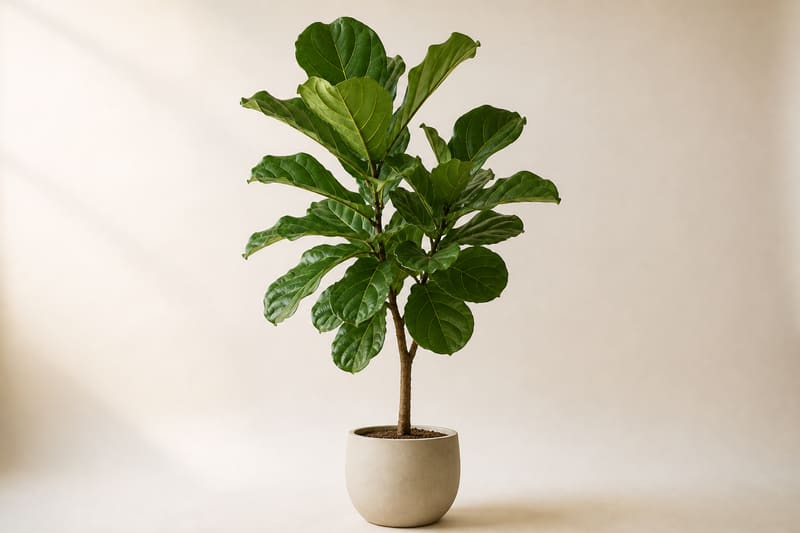
Identify Ficus lyrata by its woody stem and large bullate, lyre-shaped leaves, then use observable care signals.
Light
bright filtered or indirect
Water
water after the upper root zone dries, then drain fully
Soil
structured moisture-retentive but well-drained houseplant mix
Temperature
Warm, draft-free
Plant dossier
Plant overview
Fiddle Leaf Fig is Ficus lyrata, a tropical evergreen tree in the fig family. Fiddle-leaf fig and banjo fig are common-name aliases. The edible common fig is Ficus carica, a different species and search intent.
Plant identification
Botanical characteristics
- Family
- Moraceae
- Native range
- tropical western and central Africa
- Growth habit
- broadleaf evergreen tropical tree grown indoors
- Care level
- moderate
- Common names
- Fiddle Leaf Fig, Fiddle-leaf fig, Banjo fig
- Propagation
- Stem cuttings, Air layering
- Pet safety
- Milky latex can irritate skin and the plant should be kept away from pets and children who may chew it
Look for an upright woody stem and alternate, very large leathery leaves with a broad upper blade, narrower waist, prominent branching veins and a bullate surface. The lyre-like outline distinguishes it from Rubber Plant oval leaves.
Before you choose
Is this plant a good fit?
A good fit for
- Bright rooms with filtered light
- Growers who can observe dry-down
- Homes with room for an upright woody plant
Think twice if
- Homes where pets or children may chew foliage
- Cold drafty locations
- Containers without drainage
Care foundation
Care summary
Coordinate filtered light, root-zone dry-down, open drainage and moderate feeding during active growth. Do not use a fixed watering day.
Detailed care
Read the conditions, not a calendar
Light
Bright filtered or indirect light supports compact, strong growth. Introduce brighter exposure gradually; sudden hot sun can bleach or scorch exposed leaves.
Watering
Check below the surface and compare pot weight. Water thoroughly once the upper root zone has dried, drain completely and adjust timing as light, season and pot volume change.
Soil and pot
Use structured houseplant mix that retains some moisture but still admits air and drains freely. Increase pot size modestly only when roots or wetting behavior justify it.
Temperature and humidity
Warm stable indoor conditions are preferable. Protect the plant from cold drafts and abrupt temperature change; ordinary humidity cannot compensate for saturated roots or poor light.
Getting established
Your first 30 days
- 01
Days 1–3: confirm identity, drainage and filtered light.
- 02
Week 1: record wet pot weight and existing marks.
- 03
Week 2: inspect leaf undersides and stem joints.
- 04
Weeks 3–4: make one evidence-based change only if needed.
Growth and maintenance
Support the way it grows
Growth expectations
- Pale crown leaves expand and darken
- Bullate blades broaden around a narrower waist
- The woody stem extends from the active tip
Seasonal changes
- Short cool days extend dry-down
- Strong summer windows increase scorch risk
Common mistakes
- Confusing Ficus lyrata with edible fig or another Ficus species
- Watering on a fixed weekday
- Moving abruptly into hot direct sun
Read the plant
Growth signals and practical checks
Healthy growth
- New leaves open without distortion
- Internodes remain proportionate to earlier growth
- The pot completes a predictable dry-down
Warning signs
- Soft dark roots with persistent wetness
- Rapid leaf drop after a cold draft
- Confirmed scale or mite evidence
Common mistakes
- Confusing Ficus lyrata with edible fig or another Ficus species
- Watering on a fixed weekday
- Moving abruptly into hot direct sun
Practical notes
- The lyre-shaped outline and bullate surface are key identification features
- Clean glossy leaves gently so pests and damage remain visible
Safety
Toxicity and safety
Cut stems and leaves release milky latex that can irritate skin. Wear gloves when pruning and keep the plant and cut material away from pets and children who may chew it.
Observation
Problems and observation
Check first
Yellowing, leaf drop, brown patches, curling and slow growth are observations, not diagnoses. Combine leaf age, damage texture, recent movement, pot weight and root or pest evidence.
Safe next action
Record the newest leaf, oldest lower leaf, active tip, sheltered stem joints and pot weight. Change one variable and compare the next leaf cycle.
04Open a related diagnosis
Frequently asked questions
Is Fiddle Leaf Fig the same as an edible fig?
No. Fiddle Leaf Fig is Ficus lyrata; the common edible fig is Ficus carica.
Is the milky sap irritating?
It can irritate skin, so wear gloves when pruning and keep cut material away from pets and children.
Is Banjo Fig the same plant?
Yes, Banjo Fig and India Fiddle Leaf Fig are common-name aliases for Ficus lyrata.