
Plant profile
Hedera helix
English Ivy
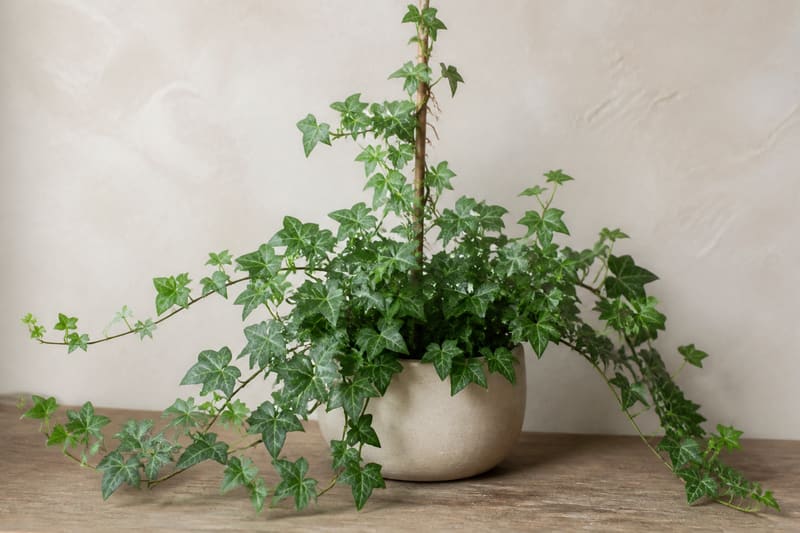
Identify English Ivy by juvenile lobed evergreen leaves, woody climbing stems, and adventitious rootlets, then manage indoor light, moisture, mites, pruning, propagation, and pet safety.
Light
bright indirect
Water
allow the top few centimetres of mix to dry, then water evenly and discard runoff without allowing complete desiccation or persistent saturation
Soil
well-drained peat-free multipurpose or loam-based houseplant mix in a modest container with open drainage
Temperature
Warm, draft-free
Plant dossier
Plant overview
English Ivy is an evergreen woody climber in the Araliaceae family. Kew accepts Hedera helix and records a native range from Europe and the Mediterranean region east to Iran. Indoors it is usually maintained in the juvenile phase, with trailing or climbing stems and three- to five-lobed leaves.
Plant identification
Botanical characteristics
- Family
- Araliaceae
- Native range
- Europe and the Mediterranean region east to Iran
- Growth habit
- evergreen woody climbing vine with juvenile lobed foliage and adventitious stem rootlets
- Care level
- moderate; adaptable to indoor light but sensitive to prolonged saturation, complete dry-down, concentrated heat, and spider mites
- Common names
- Common Ivy, European Ivy
- Propagation
- Stem cuttings with viable nodes, Division of rooted sections
- Pet safety
- ASPCA lists English Ivy as toxic to dogs, cats, and horses because it contains triterpenoid saponins; ingestion can cause vomiting, abdominal pain, hypersalivation, or diarrhea
Juvenile leaves usually have three to five lobes in alternating positions along woody stems. Fine adventitious rootlets can attach climbing stems to a surface; adult outdoor growth may produce less-lobed leaves and flowers that are not typical of the juvenile indoor display.
Before you choose
Is this plant a good fit?
A good fit for
- Cooler rooms with bright indirect light
- Hanging or trained indoor displays
- Growers willing to inspect leaf undersides for mites
- Homes that can keep the plant away from pets
Think twice if
- Homes where pets can chew foliage
- Hot dry positions above radiators
- Undrained decorative containers
- Unmanaged outdoor planting where English Ivy is invasive or restricted
Care foundation
Care summary
Coordinate bright indirect light, a measured moist-to-dry root cycle, open drainage, cooler stable room conditions, mite inspection, conservative feeding during active growth, node-aware pruning, and stem-cutting propagation.
Detailed care
Read the conditions, not a calendar
Light
Use bright indirect light for compact growth. Green forms tolerate lower light, while variegated cultivars need brighter conditions to retain their pattern. Acclimate any increase gradually because strong direct sun through glass can scorch foliage.
Watering
Allow the top few centimetres of mix to dry, then wet the root ball evenly and discard runoff. Avoid both persistent saturation and complete desiccation; pot weight, deeper moisture, light, temperature, and root volume determine the interval.
Soil and pot
Use a well-drained peat-free multipurpose or loam-based houseplant mix in a modest draining pot. Do not use an oversized wet container or a gravel layer as a substitute for an open drain.
Temperature and humidity
English Ivy generally performs well in cooler stable indoor conditions. Keep it away from radiators, hot glass, and forced dry air. Warm dry rooms can favor spider mites, so inspect for stippling, moving specks, cast skins, and webbing beneath leaves.
Getting established
Your first 30 days
- 01
Days 1–3: confirm English Ivy from juvenile lobed leaves and climbing stems, photograph the baseline, inspect leaf undersides, and verify drainage.
- 02
Week 1: map indirect light, direct-sun boundaries, temperature, pet access, root-zone moisture, and nearby plants.
- 03
Week 2: learn pot weight, moisture depth, drain time, and leaf firmness without feeding or repotting automatically.
- 04
Weeks 3–4: make one supported adjustment and judge new lobed leaves, stem spacing, roots, and mite evidence rather than old damage.
Growth and maintenance
Support the way it grows
Growth expectations
- Juvenile lobed leaves develop along trailing or climbing stems
- Adventitious rootlets can attach stems to suitable surfaces
- Node-aware pruning can increase branching
- Healthy stem cuttings form roots and new shoots
Seasonal changes
- Brighter periods increase growth and moisture use
- Cooler lower-light periods extend dry-down
- Heated winter air can increase spider-mite pressure
- Abrupt hot sun can scorch shade-grown leaves
Common mistakes
- Watering by calendar
- Letting the root ball remain saturated or completely dry
- Placing ivy over a radiator
- Missing mites hidden beneath dense foliage
- Confusing English Ivy with unrelated plants called ivy
Read the plant
Growth signals and practical checks
Healthy growth
- Firm matte-to-glossy lobed leaves
- Flexible healthy stems
- Compact new internodes
- Firm functioning roots
- Leaf undersides free of mites and webbing
Warning signs
- Dark soft roots
- Progressive leaf fall above wet mix
- Fine stippling or webbing
- Expanding water-soaked lesions
- Severe drying beside heat
- Pet chewing
Common mistakes
- Watering by calendar
- Letting the root ball remain saturated or completely dry
- Placing ivy over a radiator
- Missing mites hidden beneath dense foliage
- Confusing English Ivy with unrelated plants called ivy
Practical notes
- Inspect leaf undersides and dense stem junctions before symptoms spread
- Compare new internode spacing with window exposure to judge current light
Safety
Toxicity and safety
ASPCA lists English Ivy as toxic to dogs, cats, and horses and identifies triterpenoid saponins. Keep the plant and pruned material inaccessible; contact a veterinarian or poison-control professional after suspected ingestion.
Observation
Problems and observation
Check first
Map each change to leaf age, one stem section, the light-facing side, the crown, roots, or the whole plant. Add pot weight, moisture duration, root texture, heat exposure, and confirmed pest evidence before acting.
Safe next action
Photograph the pot, root zone, three marked stems, representative juvenile leaves, leaf undersides, support, and visible damage. Record moisture depth, drain time, direct-ray boundaries, temperature, internode spacing, recent movement, and confirmed insects so future change is compared with a real baseline.
04Open a related diagnosis
Frequently asked questions
Is English Ivy the same as Poison Ivy?
No. English Ivy is Hedera helix in the Araliaceae family; Poison Ivy belongs to Toxicodendron and has a different identity and hazard profile.
Is English Ivy the same as Pothos or Devil's Ivy?
No. Pothos is Epipremnum aureum, an aroid with heart-shaped leaves; the shared word ivy does not establish a botanical relationship.
Is English Ivy toxic to cats and dogs?
Yes. ASPCA lists English Ivy as toxic to dogs and cats; keep it inaccessible and contact a veterinarian after suspected ingestion.
Can English Ivy be planted outdoors everywhere?
No. It is invasive or regulated in parts of North America, so check local guidance and never release an indoor plant into unmanaged habitat.