
Plant profile
Hoya carnosa
Hoya carnosa
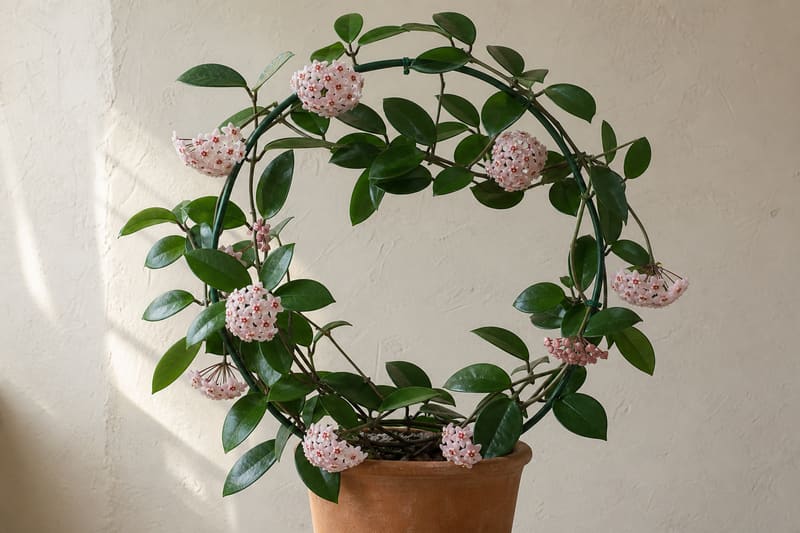
Identify Hoya carnosa by opposite thick oval leaves, twining vines, persistent flower peduncles, and waxy star-flowered umbels, then coordinate bright filtered light, airy roots, stable watering, and node propagation.
Light
bright filtered or indirect light, with gradual acclimation to gentle sun and stable positioning during bud development
Water
Let root zone dry
Soil
Fast draining
Temperature
Warm, draft-free
Plant dossier
Plant overview
Hoya carnosa is an evergreen climbing member of the dogbane family grown for thick waxy leaves and fragrant rounded flower clusters. Kew accepts the species and records its native range from southern China and Laos through southern Japan and Taiwan.
Plant identification
Botanical characteristics
- Family
- Apocynaceae
- Native range
- southern and southeastern China through Laos, Myanmar, southern Japan, the Nansei Islands, and Taiwan
- Growth habit
- evergreen epiphytic or lithophytic climbing vine with thick opposite leaves and persistent flowering peduncles
- Care level
- moderate; tolerant of a snug pot but dependent on bright filtered light, root aeration, stable watering, and preserved flower spurs
- Common names
- Wax Plant, Porcelain Flower, Porcelainflower, Honey Plant
- Propagation
- Stem cuttings with viable nodes, Layering flexible vines, Semi-ripe cuttings
- Pet safety
- ASPCA lists Hoya carnosa as non-toxic to dogs, cats, and horses, while noting that any plant material can still cause gastrointestinal upset; prevent chewing and contact a veterinarian after concerning symptoms
Look for flexible twining vines with opposite pairs of thick oval dark-green leaves. Mature plants can form rounded umbels of many small waxy five-pointed white or pale-pink flowers with darker centers on short persistent peduncles.
Before you choose
Is this plant a good fit?
A good fit for
- Bright rooms with filtered window light
- Trellises or hanging displays with stable positioning
- Growers willing to preserve old flower peduncles
- Homes seeking an ASPCA-listed non-toxic plant
Think twice if
- Dark corners
- Oversized undrained containers
- Frequent calendar watering
- Locations exposed to cold drafts
- Owners who remove every spent flower spur
Care foundation
Care summary
Coordinate bright filtered light, substantial but not extreme dry-down, an airy epiphytic root zone, moderate humidity with airflow, conservative feeding during active growth, stable budding conditions, and node-based propagation.
Detailed care
Read the conditions, not a calendar
Light
Place the plant close enough to a bright window for compact growth and flowering, while filtering abrupt hot sun. Once buds appear, avoid repeatedly rotating or moving the vine.
Watering
Combine pot weight, deeper moisture, leaf firmness, season, and active growth. Water the occupied root ball thoroughly when much of it has dried, then drain completely and remove runoff.
Soil and pot
Use a loose peat-free fast-draining medium with coarse durable structure in a modest pot. Hoya carnosa tolerates a snug root system; unused wet volume increases root risk without forcing flowers.
Temperature and humidity
Maintain warm stable indoor conditions, moderate humidity, and gentle air exchange. Protect leaves and buds from cold drafts, direct HVAC streams, and concentrated heat at glass.
Getting established
Your first 30 days
- 01
Days 1–3: confirm Hoya carnosa from opposite thick oval leaves and twining vines, photograph leaves and peduncles, inspect pests, and verify drainage.
- 02
Week 1: map window light, direct-sun boundaries, temperature, pet access, root-zone moisture, and support stability.
- 03
Week 2: learn pot weight, deeper moisture, leaf firmness, and drain time without feeding or repotting automatically.
- 04
Weeks 3–4: make one supported adjustment and judge new leaf pairs, vine spacing, roots, and peduncles rather than old damage.
Growth and maintenance
Support the way it grows
Growth expectations
- Opposite thick leaves develop along extending twining vines
- Mature well-lit plants form rounded fragrant flower umbels
- Persistent peduncles can rebloom
- Healthy node cuttings form roots and new vines
Seasonal changes
- Warm bright periods support vine and flower development
- Cooler lower-light periods extend dry-down
- Sudden hot sun can scorch shade-grown leaves
Common mistakes
- Watering by calendar
- Keeping a mature plant too far from useful light
- Repotting into excessive wet volume
- Removing old flower peduncles
- Moving the plant after buds form
Read the plant
Growth signals and practical checks
Healthy growth
- Firm glossy opposite leaves
- Flexible continuous vines
- Compact new internodes
- Firm functioning roots
- Stable peduncles
Warning signs
- Dark soft roots
- Progressive leaf drop above wet mix
- Cottony insects at nodes
- Fixed scale colonies
- Rapid bud loss after environmental change
Common mistakes
- Watering by calendar
- Keeping a mature plant too far from useful light
- Repotting into excessive wet volume
- Removing old flower peduncles
- Moving the plant after buds form
Practical notes
- Mark old flower peduncles before pruning because they can rebloom
- Compare new internode spacing with window exposure to judge current light
Safety
Toxicity and safety
ASPCA lists Hoya carnosa as non-toxic to dogs, cats, and horses. Even non-toxic plant material can cause gastrointestinal upset when chewed, so discourage access and contact a veterinarian after concerning symptoms.
Observation
Problems and observation
Check first
Map each change to one leaf, one vine, a light-facing side, flower structures, roots, or the whole plant. Add pot weight, moisture duration, root texture, recent movement, temperature, and confirmed insects before acting.
Safe next action
Photograph the support, pot, root zone, three marked leaf pairs, the newest vine section, every existing peduncle, and any visible damage. Record pot weight, moisture depth, drain time, direct-ray boundaries, temperature, recent movement, internode spacing, bud stability, and confirmed insects so each future change can be compared with a real baseline.
04Open a related diagnosis
Frequently asked questions
Is Hoya carnosa the same as wax plant?
Yes. Wax plant, porcelain flower, and honey plant are common names for Hoya carnosa, though other Hoya species may also be sold as wax plants.
Is Hoya carnosa toxic to cats and dogs?
ASPCA lists it as non-toxic to dogs, cats, and horses, but chewing any plant material can still cause stomach upset, so prevent access and contact a veterinarian if symptoms occur.
Why is my Hoya carnosa not flowering?
Check maturity, useful bright light, stable care, and whether persistent flower peduncles have been preserved before changing fertilizer.
Should old Hoya flower spurs be cut off?
No. Retain firm peduncles because Hoya carnosa can produce future flowers from them.