
Plant profile
Adiantum raddianum
Maidenhair Fern
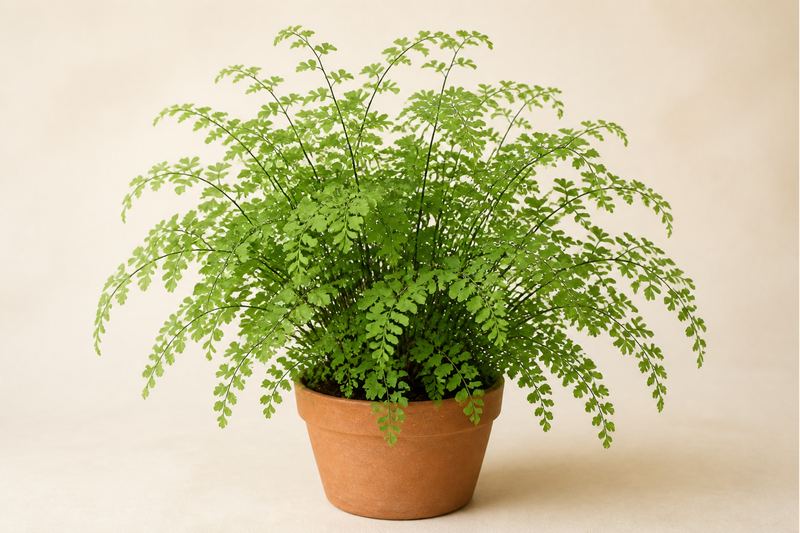
Identify Maidenhair Fern by its fine black wiry stipes, delicate fan-shaped pinnules, coiled new croziers, and clumping rhizome, then coordinate bright shade, moist aerated soil, humidity, and careful pruning.
Light
Bright indirect light or partial shade, sheltered from strong direct sun and hot glass
Water
Keep the root zone consistently moist but aerated
Soil
Clean moisture-retentive but freely draining peat-free houseplant compost in a proportional container with an open drain
Temperature
Stable frost-free indoor warmth away from cold panes, heating outlets, exterior doors, and abrupt changes
Plant dossier
Plant overview
Maidenhair Fern is Adiantum raddianum, a tender evergreen fern in Pteridaceae from Mexico through tropical America. It forms an airy clump of arching, finely divided fronds above a creeping rhizomatous crown.
Plant identification
Botanical characteristics
- Family
- Pteridaceae
- Native range
- Mexico through tropical America, including the West Indies and South America
- Growth habit
- tender evergreen clump-forming fern with creeping rhizomes, black wiry stipes, and finely divided fronds
- Care level
- Intermediate to demanding because its fine roots need consistent moisture and aeration while delicate fronds require filtered light, humidity, and protection from drafts
- Common names
- Maidenhair Fern, Delta Maidenhair Fern
- Propagation
- Division of rooted rhizomes, Spores under controlled specialist conditions
- Pet safety
- No species-specific toxicity conclusion is supplied by the institutional plant profiles used for this page; prevent chewing and contact a veterinarian or animal poison service if exposure causes concern
Look for shiny near-black wiry stipes, many small rounded to fan-shaped pinnules, marginal spore-bearing structures on mature foliage, and new fronds that rise as coiled croziers. The dark axes are a normal identifying feature, not automatic evidence of disease.
Before you choose
Is this plant a good fit?
A good fit for
- Bright rooms with filtered light
- Humidity-aware fern growers
- Bathrooms with suitable natural light
- Managed terrariums with adequate space
- Growers willing to monitor moisture before fronds collapse
Think twice if
- Direct-sun windows
- Dry heating vents
- Containers without drainage
- Routines that allow complete dry-out
- Homes seeking a neglect-tolerant plant
Care foundation
Care summary
Coordinate bright indirect light, a consistently moist but aerated root zone, stable warmth, supportive humidity, modest feeding during active growth, and clean removal of fully dead fronds. Each variable changes how quickly the pot uses water.
Detailed care
Read the conditions, not a calendar
Light
Provide bright filtered light or partial shade. Deep shade suppresses crown activity; strong direct exposure can scorch the thin pinnules, especially near hot glass. Judge a move from later fronds rather than old damage.
Watering
Inspect the surface and pot weight before the fern reaches total collapse. Water thoroughly, let excess leave, and empty retained drainage. A heavy wet pot with continuing wilt requires a root and rhizome check rather than another watering.
Soil and pot
Use clean moisture-retentive but freely draining compost in a proportional pot with an open drain. Preserve the established rhizome level and avoid deep unused wet volume around fine roots.
Temperature and humidity
Maintain stable frost-free warmth and protect fronds from doors, cold panes, radiators, and supply vents. Measure humidity near the canopy; use grouping, a humidifier, or a managed enclosure for a sustained change while keeping ventilation.
Getting established
Your first 30 days
- 01
Days 1–3: confirm Adiantum raddianum; photograph the fan-shaped pinnules, dark stipes, croziers, crown, roots, and container.
- 02
Week 1: map indirect light, direct rays, humidity, drafts, pot weight, drainage, and pest evidence.
- 03
Week 2: learn one moist-to-lighter root-zone cycle without allowing complete dry-out or saturation.
- 04
Weeks 3–4: make one supported change and judge the next crozier, crown firmness, and moisture use.
Growth and maintenance
Support the way it grows
Growth expectations
- New fronds emerge as coiled croziers from the rhizomatous crown
- Croziers extend and unfurl into finely divided arching fronds
- Mature stipes remain naturally dark and wiry
- Healthy clumps can be divided when they have sufficient roots and rhizome
Seasonal changes
- Winter heating can sharply reduce humidity
- Lower seasonal light slows crown activity and moisture use
- Warm bright periods increase evaporation and direct-sun risk
Common mistakes
- Letting the pot dry completely
- Keeping the container waterlogged
- Cutting healthy black stipes
- Placing delicate fronds in direct sun or forced air
- Trying to propagate detached pinnules as stem cuttings
Read the plant
Growth signals and practical checks
Healthy growth
- Firm green expanding croziers
- Flexible evenly colored mature pinnules
- Naturally dark attached stipes
- Firm rhizome crown
- Predictable moist-to-lighter pot cycle
Warning signs
- Persistent wilt above wet mix
- Soft or foul-smelling rhizome tissue
- Rapid yellow frond loss
- Expanding lesions
- Scale covers or fine webbing
Common mistakes
- Letting the pot dry completely
- Keeping the container waterlogged
- Cutting healthy black stipes
- Placing delicate fronds in direct sun or forced air
- Trying to propagate detached pinnules as stem cuttings
Practical notes
- Mark one crozier to measure crown activity
- Read pot weight before wilt prompts watering
- Distinguish normal black stipes from brittle or soft damaged tissue
Safety
Toxicity and safety
The institutional species profiles used for this page do not provide a species-specific pet-toxicity determination. Do not convert an absence of a warning into a safety guarantee; prevent chewing and contact a veterinarian or animal poison service when an exposure causes concern.
Observation
Problems and observation
Check first
Map each change by frond age, pinnule position, crozier activity, stipe flexibility, crown firmness, root-zone moisture, and exposure. This separates normal unfurling and dark stipes from drought, root failure, scorch, or pests.
Safe next action
Photograph one marked crozier, record pot weight after drainage, and inspect the same crown quadrant at each check. Make one supported change, then use clean later fronds and firm rhizome tissue to judge the response.
04Open a related diagnosis
Frequently asked questions
Why is Maidenhair Fern considered difficult indoors?
Its fine roots should not become completely dry, but they still need drainage and oxygen, while the delicate canopy also reacts to low humidity, drafts, and direct sun.
Are black stems on Maidenhair Fern normal?
Yes. Healthy Adiantum stipes are naturally dark and wiry; investigate only when they become brittle with dead fronds or soft at the crown.
Can Maidenhair Fern grow in a terrarium?
A suitably sized humid enclosure can work when filtered light, restrained watering, sanitation, condensation, and air exchange are actively managed.
Is Maidenhair Fern confirmed safe for pets?
The institutional species profiles used here do not provide a species-specific toxicity determination, so prevent chewing and seek veterinary advice when exposure causes concern.