
Plant profile
Yucca gigantea
Yucca Cane
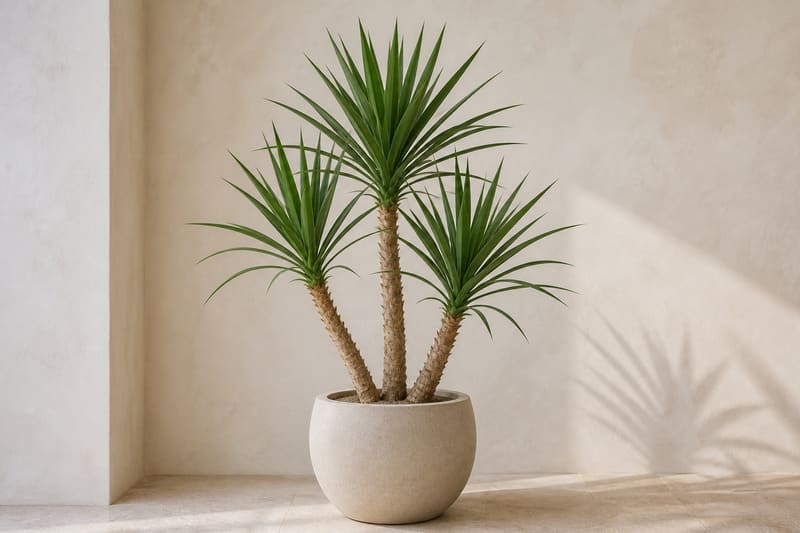
Identify Yucca gigantea by its thick woody canes and soft-tipped sword-like leaf rosettes, then coordinate bright light, substantial dry-down, drainage, and warmth.
Light
bright indoor light with any direct exposure introduced gradually
Water
Let root zone dry
Soil
structurally stable gritty freely draining container mix
Temperature
Warm, draft-free
Plant dossier
Plant overview
Yucca Cane is Yucca gigantea, an accepted tree native from central Mexico through Central America. Indoors it is grown for thick upright woody canes topped by spiral rosettes of stiff green leaves.
Plant identification
Botanical characteristics
- Family
- Asparagaceae
- Native range
- Central Mexico to Central America
- Growth habit
- evergreen tropical shrub or small tree with thick woody canes and spiral rosettes of stiff soft-tipped leaves
- Care level
- easy to moderate because the drought-tolerant plant needs bright light, free drainage, substantial root-zone dry-down, and protection from cold
- Common names
- Yucca Cane, Spineless Yucca, Giant Yucca
- Propagation
- Stem cuttings, Rooted basal suckers, Seed
- Pet safety
- ASPCA lists Yucca Cane as toxic to dogs, cats, and horses because it contains saponins; keep it away from pets and seek veterinary advice after ingestion
- Scientific synonyms
- Yucca guatemalensis, Yucca elephantipes
Look for thick tan-gray canes, sometimes flared near the base, with dense spiral rosettes at the tips. The evergreen leaves are leathery, linear to lanceolate, sword-like, and softer-tipped than the sharply armed foliage of many other yuccas.
Before you choose
Is this plant a good fit?
A good fit for
- Bright rooms
- Growers who prefer a drought-tolerant upright floor plant
- People able to verify deep dry-down
- Warm stable interiors
Think twice if
- Dark rooms
- Cold drafty rooms
- Homes unable to keep a toxic plant away from pets
- Sealed pots that retain runoff
Care foundation
Care summary
Coordinate bright light, steady warmth, substantial root-zone dry-down, free drainage, restrained feeding, and deliberate inspection of leaf and cane evidence.
Detailed care
Read the conditions, not a calendar
Light
Bright indoor light supports compact balanced rosettes. Yucca Cane can tolerate direct light after acclimation, but an abrupt move from shade into intense sun can scorch exposed tissue. Increase exposure gradually.
Watering
Probe at several depths and compare pot weight. When much of the occupied root zone is dry, water it evenly and discard runoff. The plant tolerates drought better than persistent saturation, which can cause root and basal-cane failure.
Soil and pot
Use a stable gritty freely draining mix in a container with an open drain. Increase pot size modestly only when roots have filled the existing container or the medium no longer drains correctly.
Temperature and humidity
Maintain stable frost-free conditions and protect the plant from cold glass, drafts, and rapid transitions. Normal indoor humidity is generally adequate; do not keep rosette centers wet or substitute misting for root-zone care.
Getting established
Your first 30 days
- 01
Days 1–3: confirm Yucca gigantea identity, inspect canes and both leaf surfaces, and verify drainage.
- 02
Week 1: map bright light, drafts, and temperature at rosette height.
- 03
Week 2: record pot weight, deeper moisture, drain time, and tip condition.
- 04
Weeks 3–4: make one supported adjustment and judge rosette growth and cane firmness.
Growth and maintenance
Support the way it grows
Growth expectations
- New leaves emerge from rosettes at cane tips
- Older lower leaves can expose more cane over time
- Established indoor plants grow slowly during cooler lower-light periods
Seasonal changes
- Lower winter light slows water use and growth
- Heated air can increase tip stress
- Warm active growth supports feeding pruning and propagation
Common mistakes
- Keeping Yucca Cane in deep shade
- Watering on a fixed calendar
- Leaving runoff in a cover pot
- Misting instead of checking the roots
Read the plant
Growth signals and practical checks
Healthy growth
- Firm canes
- Compact sword-like leaf rosettes
- Active growing centers
- Predictable dry-to-water root-zone cycle
Warning signs
- A soft advancing cane
- Persistently wet mix with soft dark roots
- Webbing scale covers or mealybug colonies
Common mistakes
- Keeping Yucca Cane in deep shade
- Watering on a fixed calendar
- Leaving runoff in a cover pot
- Misting instead of checking the roots
Practical notes
- Mark leaf-tip browning before changing care
- Separate a firm dry cut cane top from advancing soft decay
Safety
Toxicity and safety
ASPCA lists Yucca Cane as toxic to dogs, cats, and horses because it contains saponins. Keep the plant away from pets and seek veterinary advice promptly after suspected ingestion rather than relying on home treatment.
Observation
Problems and observation
Check first
Map each change to leaf age, the bright side, one branch, or the whole canopy. Review recent moves, cold exposure, pot moisture, and pest evidence before choosing a correction.
Safe next action
Record the same rosette, cane firmness, leaf-tip boundary, pot weight, deeper moisture, drain time, temperature, light direction, and both leaf surfaces. Change one supported variable and compare healthy new growth rather than expecting old damage to reverse.
04Open a related diagnosis
Frequently asked questions
Why are my Yucca Cane leaf tips turning brown?
Compare deep dry-down, forced-air exposure, fertilizer salts, and root condition before changing several variables.
Is the sealed top of a Yucca Cane stem rot?
Not when it remains firm and dry; active rot is soft, advancing, and often associated with root-zone decline.
Is Yucca Cane safe around pets?
ASPCA lists Yucca species as toxic to dogs, cats, and horses because they contain saponins.
Can Yucca Cane grow from a leaf?
Use a healthy stem cutting or rooted basal sucker; a detached leaf alone does not produce a replacement cane.