
Plant collection
easy vining indoor plants
Easy Vining Indoor Plants for Beginners
Explore the light, watering, and propagation traits that define easy vining indoor plants, using Pothos as the documented reference profile.
Selection check
Use drainage and let light guide the watering check.
Care boundary
Prune above nodes when a vine needs a fuller shape.
Collection introduction
Explore the collection
This collection helps beginners choose a trailing houseplant by the everyday decisions that affect success: usable light, drying rhythm, and how a vine responds to pruning.
Selection criteria
Choose for your conditions
Help beginners understand easy vining indoor plants through light, drying rhythm, pruning, and node propagation, using Pothos as the documented reference profile.
- Use drainage and let light guide the watering check.
- Prune above nodes when a vine needs a fuller shape.
Documented plant profiles
Available to explore now
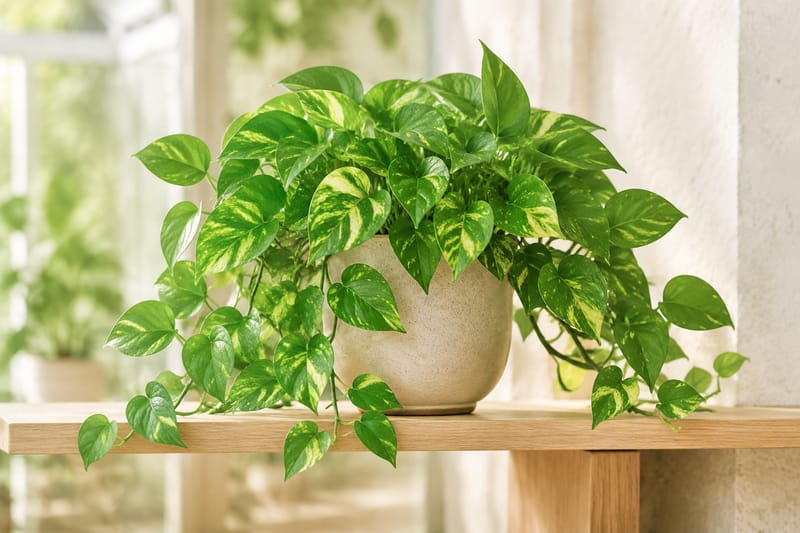
Linked plant profile
Pothos
Epipremnum aureumIdentify Pothos by its trailing growth and heart-shaped leaves, then review its essential indoor care, safety and common problem signals.
- Light
- bright indirect light; tolerates lower light with slower growth
- Water
- water after the upper mix dries
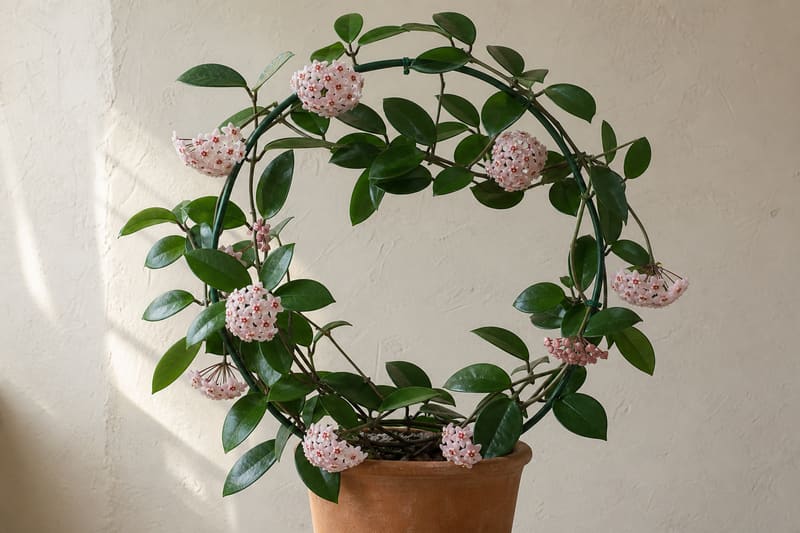
Linked plant profile
Hoya carnosa
Hoya carnosaIdentify Hoya carnosa by opposite thick oval leaves, twining vines, persistent flower peduncles, and waxy star-flowered umbels, then coordinate bright filtered light, airy roots, stable watering, and node propagation.
- Light
- bright filtered or indirect light, with gradual acclimation to gentle sun and stable positioning during bud development
- Water
- allow much of the occupied root zone to dry, then water evenly and drain completely; reduce demand as light, warmth, and growth slow
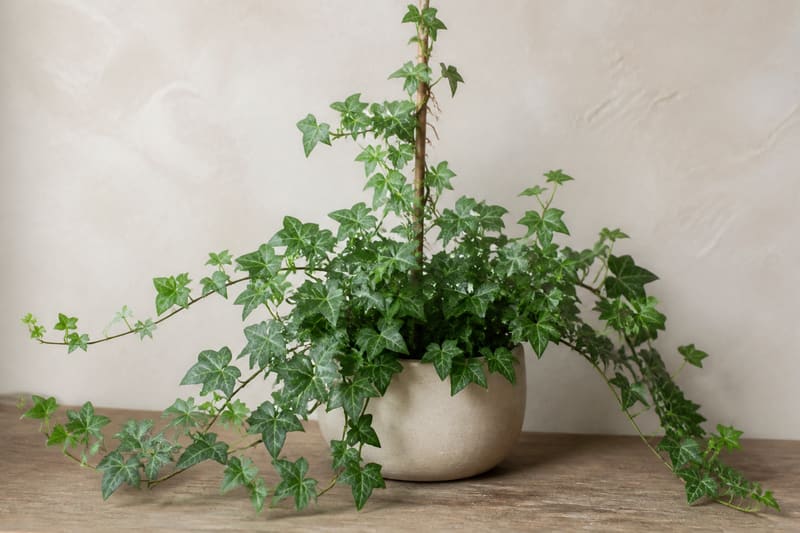
Linked plant profile
English Ivy
Hedera helixIdentify English Ivy by juvenile lobed evergreen leaves, woody climbing stems, and adventitious rootlets, then manage indoor light, moisture, mites, pruning, propagation, and pet safety.
- Light
- bright indirect light; green forms tolerate lower light, variegated forms need brighter light, and abrupt hot direct sun can scorch foliage
- Water
- allow the top few centimetres of mix to dry, then water evenly and discard runoff without allowing complete desiccation or persistent saturation
Plants mentioned
Featured plants
Pothos
the documented reference profile in this collection.
Heartleaf Philodendron
mentioned for context; no profile is linked from this collection.
Hoya Carnosa
a flowering twining vine with thick opposite leaves, airy roots, and persistent flower spurs.
English Ivy
a woody evergreen climber with juvenile lobed leaves, attaching rootlets, and a strong need for mite inspection.
Collection notes
Quick Answer
Pothos is the linked beginner reference here because its trailing vines adapt to indoor conditions and each viable node can become a new plant.
Plant Comparison
| Plant | Growth habit | Light flexibility | Propagation | | --- | --- | --- | --- | | Pothos | forgiving trailing vine | low to bright indirect | node cuttings | | Heartleaf philodendron | display-only trailing comparison | display-only | display-only |
| Hoya carnosa | substantial dry-down | twining flowering vine | bright filtered light |
| English Ivy | top layer dry, then drain fully | woody trailing or attaching stems | bright indirect light |
Care Similarities
- Use containers with drainage and let usable light set the watering rhythm.
- Inspect nodes before pruning or propagating a trailing stem.
Selection Criteria
Choose by usable room light, the drying rhythm you can monitor, and whether you want to learn node propagation. These criteria are more useful than leaf shape alone.
Beginner Recommendations
Start with Pothos if you want to learn light adjustment, watering observation, and node propagation in one forgiving vine.
FAQ
Is Pothos a good vining plant for beginners?
Yes. Its adaptable light response, forgiving drying rhythm, and node propagation make it a practical first trailing plant.
Which plant profile can I explore in this collection?
Explore Pothos, Hoya carnosa, and English Ivy here; Heartleaf philodendron is included only as a botanical comparison.
Sources
- https://plants.ces.ncsu.edu/plants/epipremnum-aureum/
Frequently asked questions
Is Pothos a good vining plant for beginners?
Yes. Its adaptable light response, forgiving drying rhythm, and node propagation make it a practical first trailing plant.
Which plant profile can I explore in this collection?
Explore Pothos, Hoya carnosa, and English Ivy; Heartleaf philodendron is included only as a botanical comparison.