
Plant profile
Pilea peperomioides
Chinese Money Plant
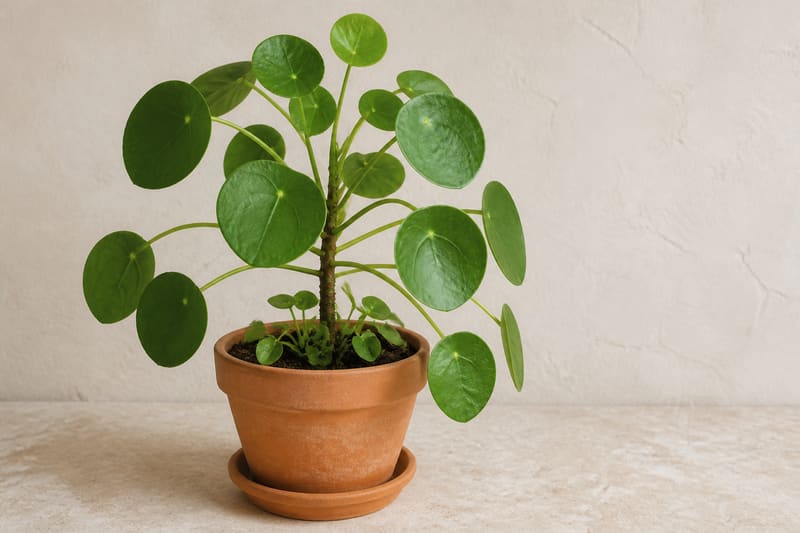
Identify Chinese Money Plant by its round peltate leaves, upright stem, and basal offsets, then coordinate light, watering, soil, rotation, propagation, and pet-safe placement.
Light
Bright indirect light with protection from hot direct sun
Water
Let upper mix dry
Soil
Airy and draining
Temperature
Warm, draft-free
Plant dossier
Plant overview
Chinese Money Plant is Pilea peperomioides, an upright evergreen perennial from southwestern China. Its circular leaves attach near their centers to long petioles, creating the coin or pancake appearance behind several common names.
Plant identification
Botanical characteristics
- Family
- Urticaceae
- Native range
- Southwestern China, specifically western Yunnan and southwestern Sichuan
- Growth habit
- compact evergreen perennial or subshrub with an upright stem, peltate round leaves, and basal offsets
- Care level
- Beginner to intermediate because bright indirect light, balanced rotation, measured dry-down, and a proportional draining pot must work together
- Common names
- Chinese Money Plant, Pancake Plant, UFO Plant, Missionary Plant, Friendship Plant, Coin Plant
- Propagation
- Rooted basal offsets, Stem cuttings
- Pet safety
- ASPCA lists Pilea peperomioides among non-toxic plants for cats and dogs, but ingestion of any plant material can still cause stomach upset; identify the scientific name and contact a veterinarian if an animal is unwell
Look for glossy round peltate leaves, a visible upright central stem with old petiole scars, and young offsets emerging from the soil around an established plant. Mature indoor plants may produce small pale flower spikes, but foliage and attachment geometry are more reliable identifiers.
Before you choose
Is this plant a good fit?
A good fit for
- Bright rooms with filtered light
- Growers who enjoy propagating offsets
- Shelves with room for a balanced upright crown
- Homes seeking a compact pet-compatible foliage plant
Think twice if
- Dark corners
- Hot direct-sun windows
- Pots without drainage
- Routines based on fixed watering dates
Care foundation
Care summary
Combine bright indirect light, measured watering, an airy proportional root zone, stable warmth, conservative feeding during active growth, gradual rotation, and clean offset propagation.
Detailed care
Read the conditions, not a calendar
Light
Provide abundant indirect light and protect leaves from hot direct sun. Read placement from petiole direction, the spacing between new nodes, new leaf size, and fixed window-facing scorch. Rotate a small consistent amount rather than repeatedly changing the plant's orientation.
Watering
Use the mix surface and pot weight together. When the upper layer begins to dry and the pot is lighter, water evenly until excess drains, then empty the saucer. Reduce frequency when seasonal light and active growth decline.
Soil and pot
Use clean freely draining houseplant mix in a container only modestly larger than the occupied root ball. Open drainage and an airy root zone matter more than a decorative container label. Keep the stem at its established depth.
Temperature and humidity
Keep the plant frost-free and away from cold drafts, hot radiators, and rapid swings at glazing. Average household humidity is often adequate; stabilize roots and airflow before using mist or humidity devices.
Getting established
Your first 30 days
- 01
Days 1–3: confirm Pilea peperomioides rather than Money Tree, Jade, or Peperomia; photograph the crown, stem, offsets, roots, and pot.
- 02
Week 1: map direct sun, bright indirect light, cold glass, heat, pot weight, drainage, and visible pests.
- 03
Week 2: learn one complete moisture cycle and mark the newest fully expanded leaf.
- 04
Weeks 3–4: make one supported adjustment and judge the next leaf, root firmness, and balanced petiole direction.
Growth and maintenance
Support the way it grows
Growth expectations
- New round leaves unfold from the crown
- Petioles orient toward the strongest light
- Basal offsets emerge around an established healthy plant
- Older lower leaves eventually leave scars on a visible stem
Seasonal changes
- Lower winter light slows leaf production and moisture use
- Warm bright periods increase dry-down and offset growth
- Cold transport can cause temporary droop or leaf drop
Common mistakes
- Confusing it with other plants called money plant
- Watering by calendar
- Overpotting a small root system
- Treating harmless mineral dots as pests
- Moving directly into strong sun
Read the plant
Growth signals and practical checks
Healthy growth
- Broad round center leaves
- Compact new internodes
- Firm anchored roots
- Predictable pot dry-down
- Healthy rooted offsets
Warning signs
- Persistent wet mix with soft roots
- Rapid yellow leaf loss
- Expanding wet lesions
- Fine webbing or cottony colonies
- Increasing stretch in new internodes
Common mistakes
- Confusing it with other plants called money plant
- Watering by calendar
- Overpotting a small root system
- Treating harmless mineral dots as pests
- Moving directly into strong sun
Practical notes
- Photograph the plant from above to track symmetry
- Compare the newest three internodes rather than the older bare trunk
- Trace an offset to its roots before separating it
Safety
Toxicity and safety
ASPCA includes Pilea peperomioides among non-toxic plants for cats and dogs, while noting that eating any plant material can still cause stomach upset. Preserve the scientific name because common names overlap, and contact a veterinarian if an animal becomes unwell.
Observation
Problems and observation
Check first
Map symptoms to the oldest or newest leaves, window-facing side, petiole joints, stem, offsets, roots, and mix. Pot weight separates dry droop from wet-root decline, while magnification separates harmless white mineral dots from mites, mealybugs, or scale.
Safe next action
Photograph the crown from above, mark the newest expanded leaf, measure the newest three internodes, and record pot weight after drainage. Inspect leaf undersides, petiole joints, roots at the drain, and every offset before changing one supported variable.
04Open a related diagnosis
Frequently asked questions
Is Chinese Money Plant the same as Money Tree?
No. Chinese Money Plant is Pilea peperomioides in Urticaceae; Money Tree is Pachira aquatica in Malvaceae.
Why does Chinese Money Plant lean toward a window?
Its petioles and leaves orient toward directional light; provide bright indirect light and rotate gradually for balanced growth.
How do I know when to water it?
Check that the upper mix has begun to dry and the pot feels lighter, then water the whole root ball and drain it fully.
Is Chinese Money Plant safe around pets?
ASPCA lists Pilea peperomioides as non-toxic to cats and dogs, but pets should not be encouraged to chew plants and any concerning ingestion warrants veterinary advice.