
Plant collection
drought-tolerant houseplants
Drought-Tolerant Houseplants: A Practical Collection
Compare dry-down, storage structures, light needs, and growth form across Snake Plant, ZZ Plant, Aloe Vera, Jade Plant, and Ponytail Palm.
Selection check
Use drainage and let the root zone dry thoroughly.
Care boundary
Treat soft leaf bases as an urgent root-zone signal.
Collection introduction
Explore the collection
This collection helps growers select drought-tolerant indoor plants by root-zone behavior rather than assuming every low-maintenance plant has identical needs.
Selection criteria
Choose for your conditions
Compare drought-tolerant houseplants through storage structures, light response, root-zone dry-down, and growth form.
- Use drainage and let the root zone dry thoroughly.
- Treat soft leaf bases as an urgent root-zone signal.
Documented plant profiles
Available to explore now
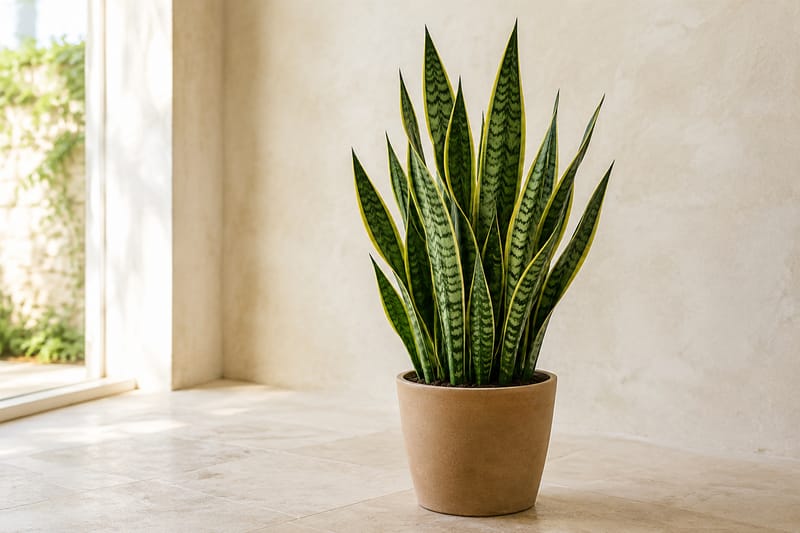
Linked plant profile
Snake Plant
Dracaena trifasciataIdentify Snake Plant by its upright leaves and rhizomatous growth, then review its essential indoor care, safety and warning signs.
- Light
- bright indirect light; survives lower light with slower growth
- Water
- allow the root zone to dry thoroughly
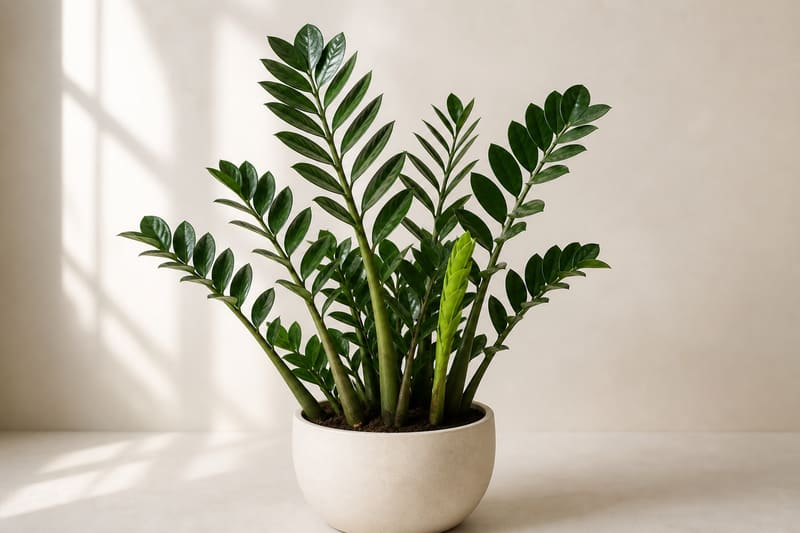
Linked plant profile
ZZ Plant
Zamioculcas zamiifoliaIdentify ZZ Plant by upright pinnate leaves, glossy leaflets and water-storing rhizomes, then use observable care signals.
- Light
- bright indirect light for stronger growth; tolerates lower light
- Water
- allow substantial dry-down before thorough watering
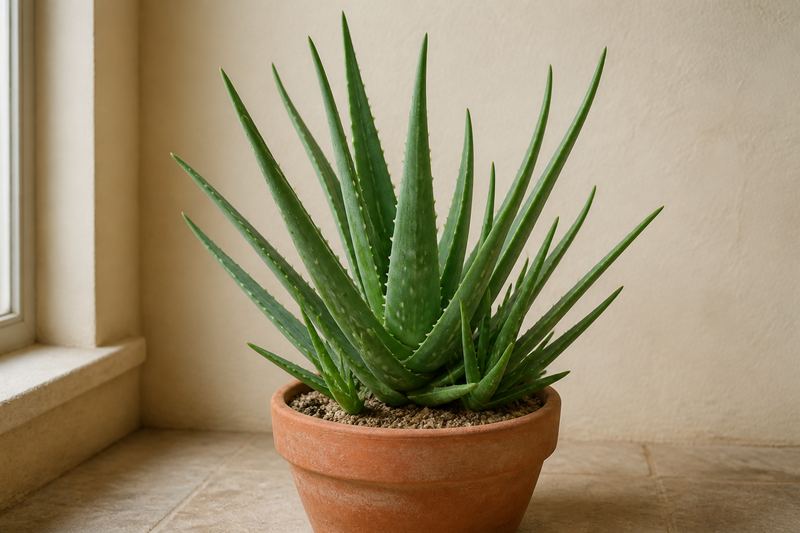
Linked plant profile
Aloe Vera
Aloe veraIdentify Aloe vera by its stemless rosette, thick grey-green toothed leaves, offsets, and dry-growing root system, then make care decisions from light, leaf texture, and soil dry-down.
- Light
- strong light near a bright window; acclimate gradually to direct sun
- Water
- soak the root zone after it dries, then drain completely
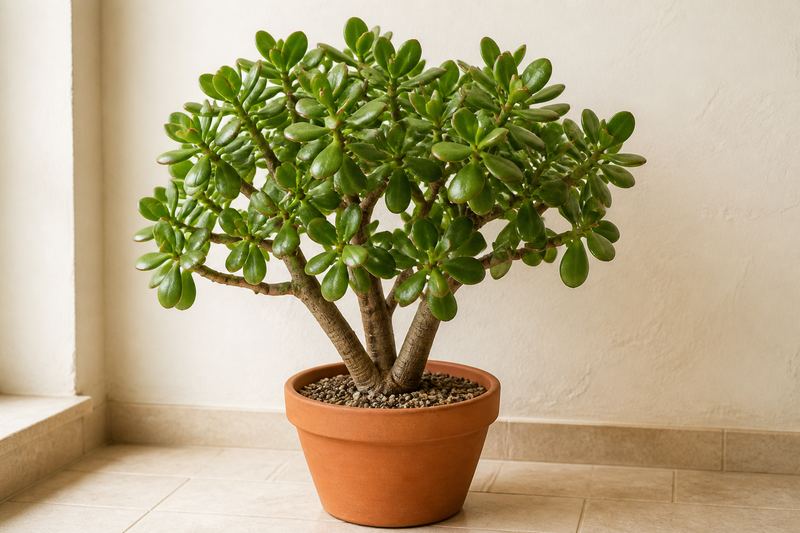
Linked plant profile
Jade Plant
Crassula ovataIdentify Jade Plant by its woody branching stems and opposite pairs of glossy oval succulent leaves, then make care decisions from light, dry-down, and leaf texture.
- Light
- strong light and appropriate acclimated sun for compact growth
- Water
- water deeply after the root zone dries, then drain completely
Linked plant profile
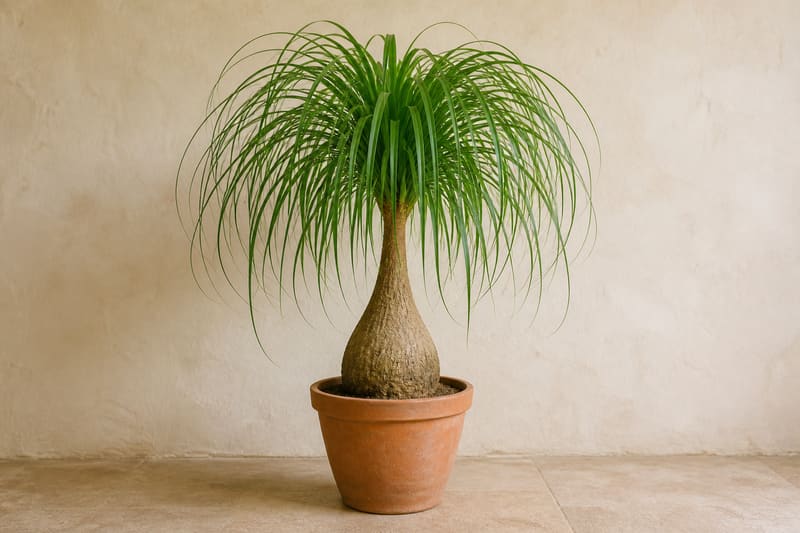
Ponytail Palm
Beaucarnea recurvataIdentify Ponytail Palm by its swollen water-storing caudex and fountain of narrow recurving leaves, then coordinate bright light, complete dry-down, and seasonal warmth.
- Light
- strong light near a bright window; acclimate gradually to direct sun
- Water
- allow complete root-zone dry-down, then water deeply and drain completely
Linked plant profile
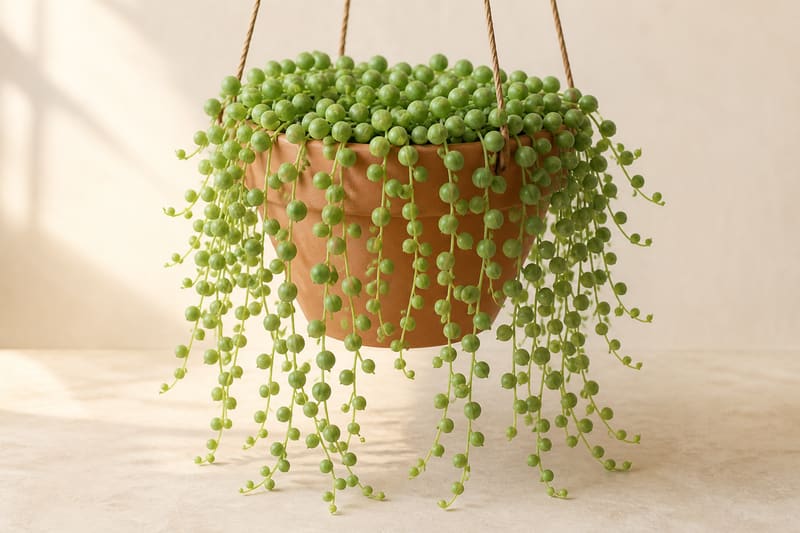
String of Pearls
Curio rowleyanusIdentify Curio rowleyanus by spherical windowed succulent leaves on trailing stems, then coordinate crown light, substantial dry-down, fast drainage, node propagation, and safe placement.
- Light
- bright indirect light across both the crown and trails, with only gradual acclimation to gentle direct sun
- Water
- allow the occupied root zone to dry substantially, then water evenly and drain completely; use pot weight, deeper moisture, and pearl firmness together
Linked plant profile
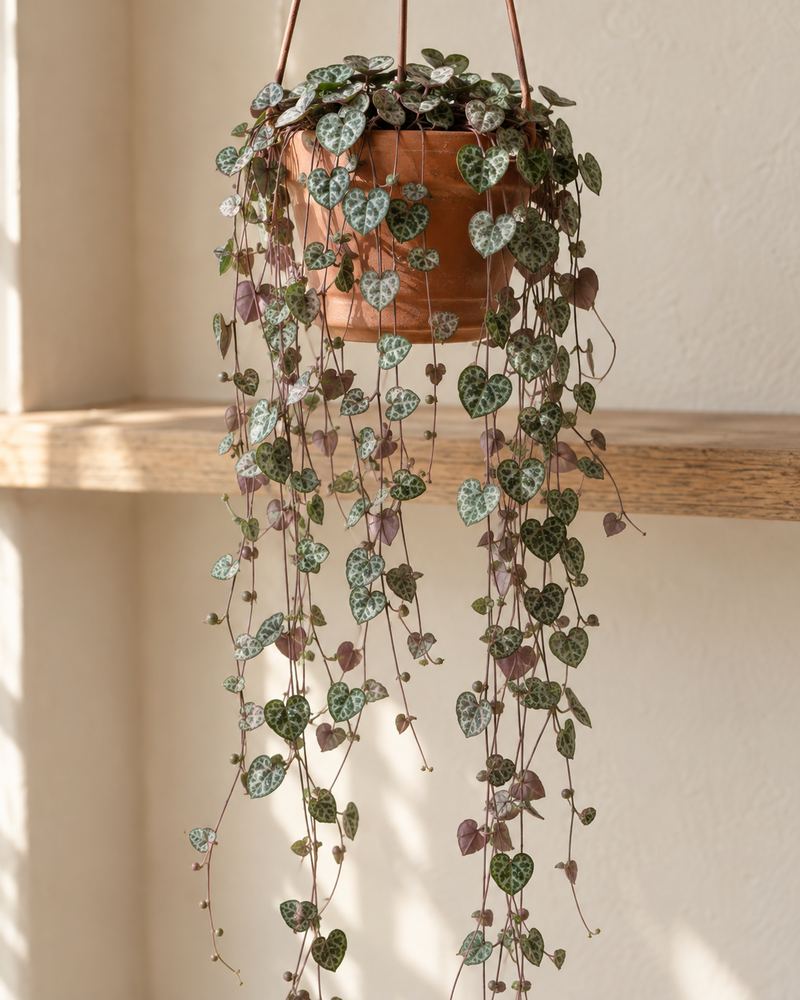
String of Hearts
Ceropegia woodiiIdentify String of Hearts by paired heart-shaped silver-marbled leaves, purple undersides, slender trailing stems, and beadlike aerial tubers, then coordinate crown light, dry-down, drainage, pruning, and node propagation.
- Light
- bright indirect light across the crown and trails, with gentle direct sun introduced gradually
- Water
- allow the occupied root zone to dry substantially, then water evenly and drain completely; confirm demand with pot weight, deeper moisture, leaf firmness, and tuber condition
Plants mentioned
Featured plants
Snake Plant
upright leaves supported by rhizomes.
ZZ Plant
thick rhizomes and slow water use.
Aloe Vera
succulent rosette leaves and basal offsets.
Jade Plant
woody branching and opposite succulent leaves.
Ponytail Palm
a swollen caudex and fountain of recurving leaves.
String Of Pearls
a trailing succulent whose spherical leaves and shallow crown require bright top light and measured dry-down.
String Of Hearts
paired marbled leaves and storage tubers on delicate node-rooting vines.
Collection notes
Quick Answer
Snake Plant, ZZ Plant, Aloe Vera, Jade Plant, and Ponytail Palm are linked drought-tolerant profiles with different storage structures, light responses, and growth forms.
Plant Comparison
| Plant | Watering approach | Growth clue | Light distinction | | --- | --- | --- | --- | | Snake Plant | dry thoroughly | rhizome pups | tolerates lower light | | ZZ Plant | substantial dry-down | rhizome shoots | strongest lower-light tolerance | | Aloe Vera | dry before soaking | basal offsets | strong light with acclimation | | Jade Plant | dry before deep watering | woody branches | strong light for compact growth | | Ponytail Palm | complete dry-down before soaking | swollen caudex and central crown | strong light with gradual direct sun |
| String of Pearls | substantial dry-down | node-rooting trails | bright light across the crown |
| String of Hearts | substantial dry-down | tuberous node-rooting trails | bright light across the crown |
Care Similarities
- All require an open drainage route and should not stand in runoff.
- Cooler or dimmer conditions extend dry-down.
- Stored water does not protect roots from persistently wet soil.
Selection Criteria
Choose the plant whose light requirement, storage structure, mature form, and propagation pathway fit the actual room. Drought tolerance is not one shared watering schedule.
Beginner Recommendations
Start with a draining container and learn one complete dry-down. Use each linked profile because rhizomes, succulent leaves, woody stems, and a caudex create different warning signals.
FAQ
Are all drought-tolerant houseplants low-light plants?
No. Aloe Vera, Jade Plant, and Ponytail Palm require substantially stronger light than ZZ Plant.
Do these plants use the same watering schedule?
No. Light, temperature, pot size, storage structure, and root health change dry-down.
Sources
- https://plants.ces.ncsu.edu/plants/dracaena-trifasciata/
- https://extension.psu.edu/snake-plant-a-forgiving-low-maintenance-houseplant
- https://plants.ces.ncsu.edu/plants/zamioculcas-zamiifolia/
- https://www.rhs.org.uk/plants/19185/zamioculcas-zamiifolia/details
- https://plants.ces.ncsu.edu/plants/aloe-vera/common-name/aloe-vera/
- https://extension.psu.edu/aloe-a-hardy-houseplant
- https://extension.arizona.edu/sites/extension.arizona.edu/files/attachment/AloeVera.pdf
- https://plants.ces.ncsu.edu/plants/crassula-ovata/common-name/jade-plant/
- https://hort.extension.wisc.edu/articles/jade-plant-crassula-ovata/
- https://powo.science.kew.org/taxon/urn%3Alsid%3Aipni.org%3Anames%3A273350-1
- https://hort.extension.wisc.edu/articles/ponytail-palm-beaucarnea-recurvata/
- https://plants.ces.ncsu.edu/plants/beaucarnea-recurvata/common-name/ponytail-palm/
- https://www.rhs.org.uk/plants/1993/beaucarnea-recurvata/details
Frequently asked questions
Is Snake Plant drought tolerant?
Yes, but drought tolerance does not protect compact rhizomes from a persistently wet pot.
Which plants can I explore here?
Snake Plant and ZZ Plant are available to explore; Aloe is mentioned only for context.