
Plant collection
tropical indoor plants
Tropical Indoor Plants: A Practical Beginner Collection
Compare beginner-friendly tropical indoor plants, their care similarities, and the best fit for your indoor conditions.
Selection check
Match watering to light and potting mix.
Care boundary
Choose one plant whose care fits your room before expanding.
Collection introduction
Explore the collection
This collection helps indoor growers compare tropical-looking plants by their everyday care patterns instead of buying from appearance alone.
Selection criteria
Choose for your conditions
Compare approachable tropical indoor plants and show how their core care needs overlap.
- Match watering to light and potting mix.
- Choose one plant whose care fits your room before expanding.
Documented plant profiles
Available to explore now
Linked plant profile
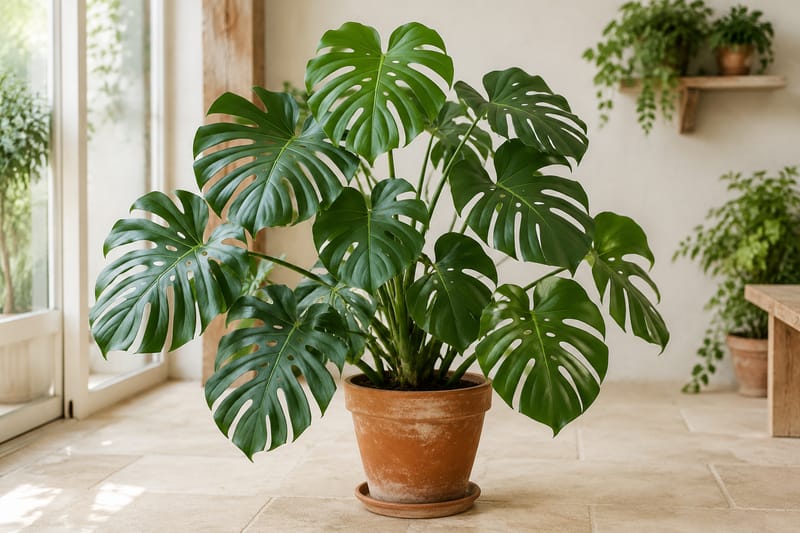
Monstera deliciosa
Monstera deliciosaIdentify Monstera deliciosa by its climbing growth, aerial roots and mature split leaves, then learn its essential indoor care, safety and common problem signals.
- Light
- Bright, indirect light; it tolerates medium light but grows more slowly.
- Water
- Water when the top 2 to 3 inches of potting mix are dry.
Linked plant profile
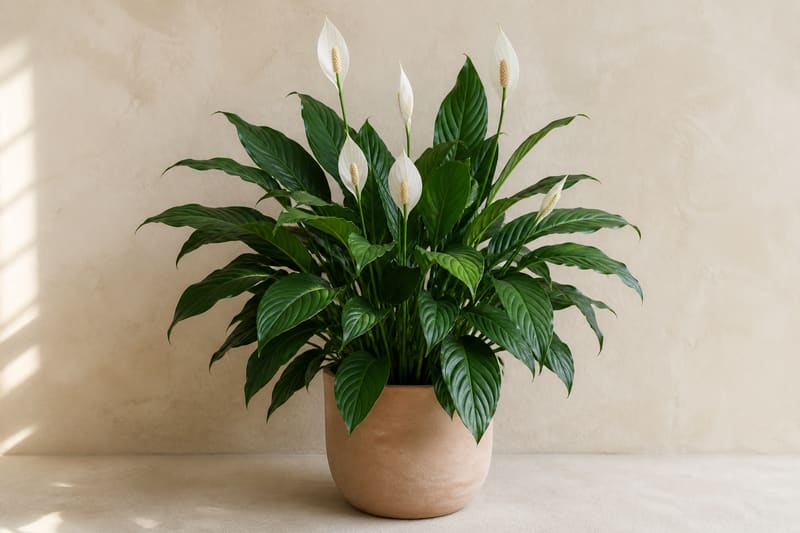
Peace Lily
Spathiphyllum wallisiiIdentify Peace Lily by its glossy clumping leaves and white spathes, then use root-zone, light, flowering and safety signals to guide indoor care.
- Light
- bright filtered or indirect light; protect from direct sun
- Water
- keep evenly moist without leaving the root zone soggy
Linked plant profile
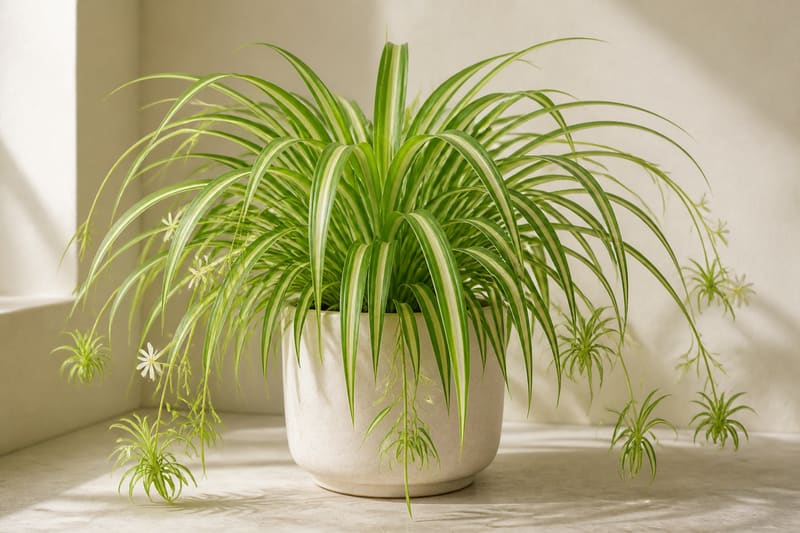
Spider Plant
Chlorophytum comosumIdentify Spider Plant by its arching striped leaves, fleshy roots and plantlet-bearing runners, then use observable light, water and growth signals for care.
- Light
- bright indirect light; tolerates lower light but protect from hot direct sun
- Water
- allow the mix to dry slightly between thorough waterings
Linked plant profile
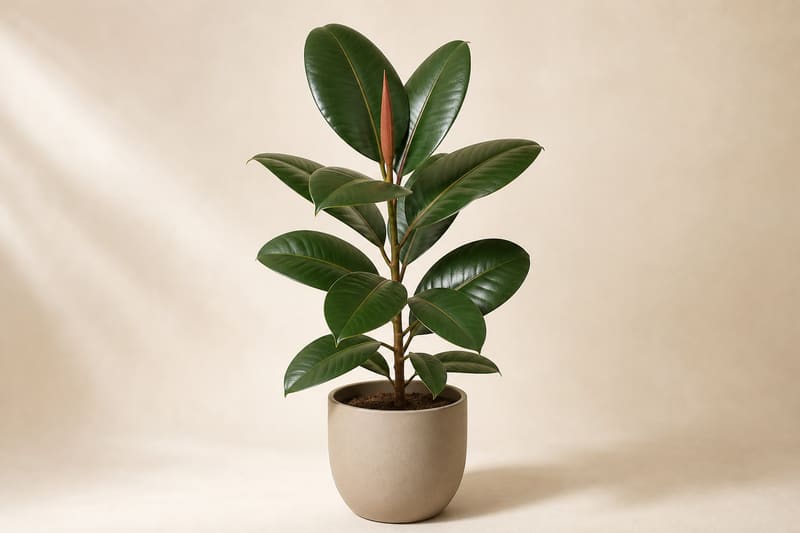
Rubber Plant
Ficus elasticaIdentify Ficus elastica by its woody stem, thick glossy oval leaves and colored emerging stipule, then use observable care signals.
- Light
- bright filtered or indirect light
- Water
- water after the upper root zone dries, then drain fully
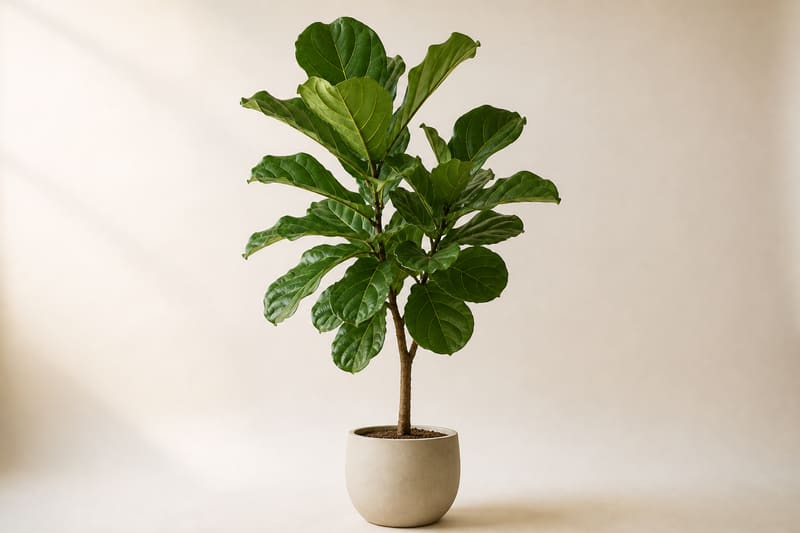
Linked plant profile
Fiddle Leaf Fig
Ficus lyrataIdentify Ficus lyrata by its woody stem and large bullate, lyre-shaped leaves, then use observable care signals.
- Light
- bright filtered or indirect light
- Water
- water after the upper root zone dries, then drain fully
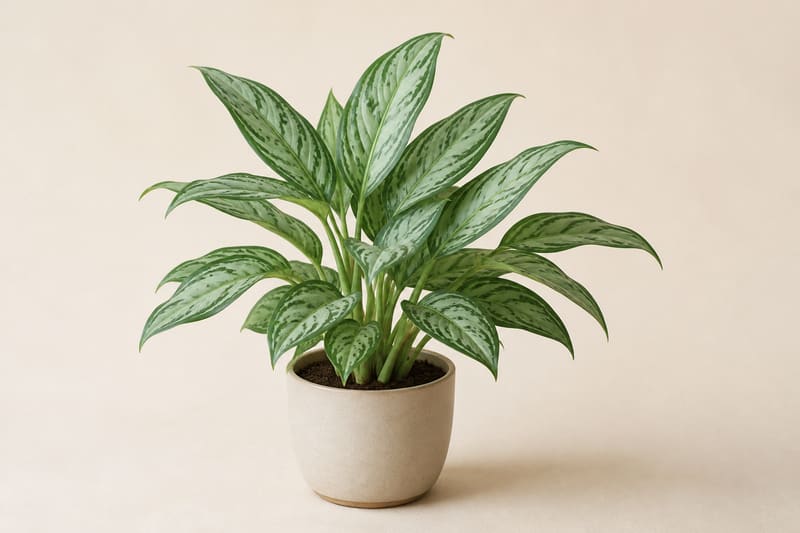
Linked plant profile
Chinese Evergreen
Aglaonema spp.Identify Chinese Evergreen as an Aglaonema cultivar group, distinguish natural variegation from damage, and use observable care signals.
- Light
- filtered or indirect light; highly variegated cultivars generally need more usable light
- Water
- water after appropriate upper-zone drying, then drain fully
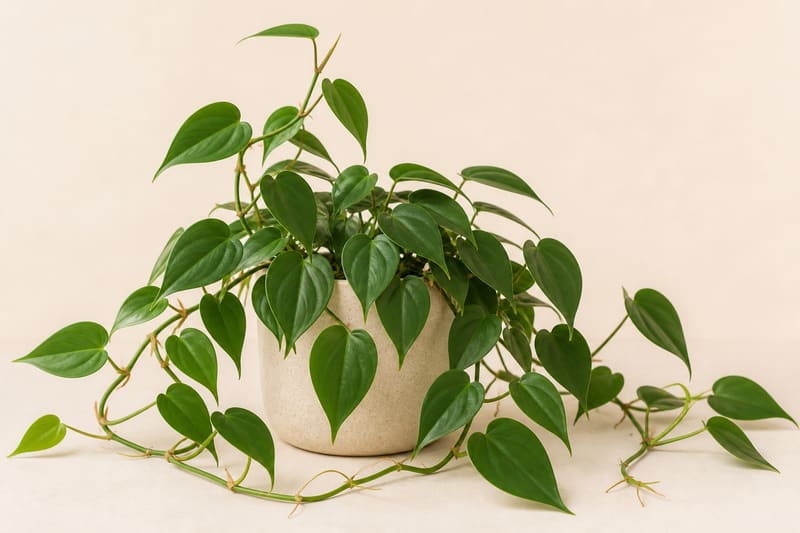
Linked plant profile
Heartleaf Philodendron
Philodendron hederaceumIdentify Heartleaf Philodendron by its glossy heart-shaped leaves, free stipules and trailing nodes, then make care decisions from observable growth.
- Light
- filtered or indirect light; weak light produces longer internodes and smaller leaves
- Water
- water after appropriate upper-zone drying, then drain fully
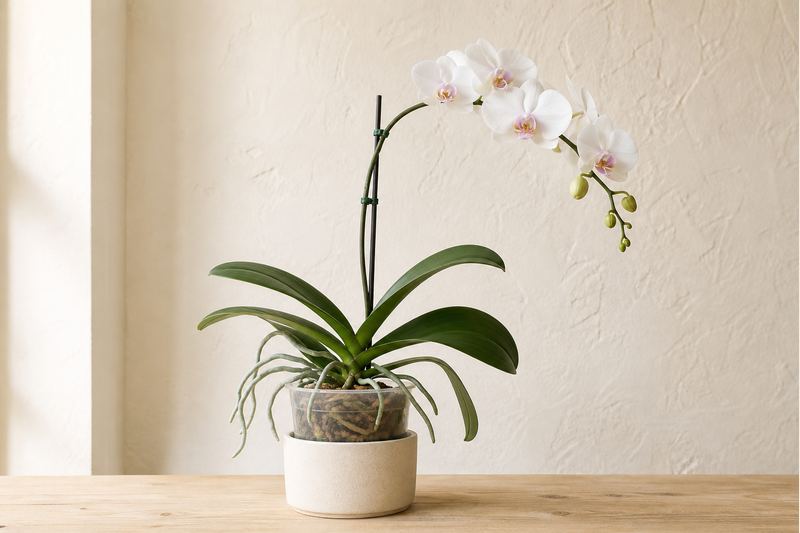
Linked plant profile
Moth Orchid
Phalaenopsis hybridsIdentify a Moth Orchid by its monopodial crown, broad leathery leaves, aerial roots, and arching flower spikes, then make care decisions from root and bark evidence.
- Light
- bright filtered or indirect light; protect from hot direct midday sun
- Water
- water bark and roots thoroughly as they approach dry, then drain fully and keep the crown dry
Linked plant profile
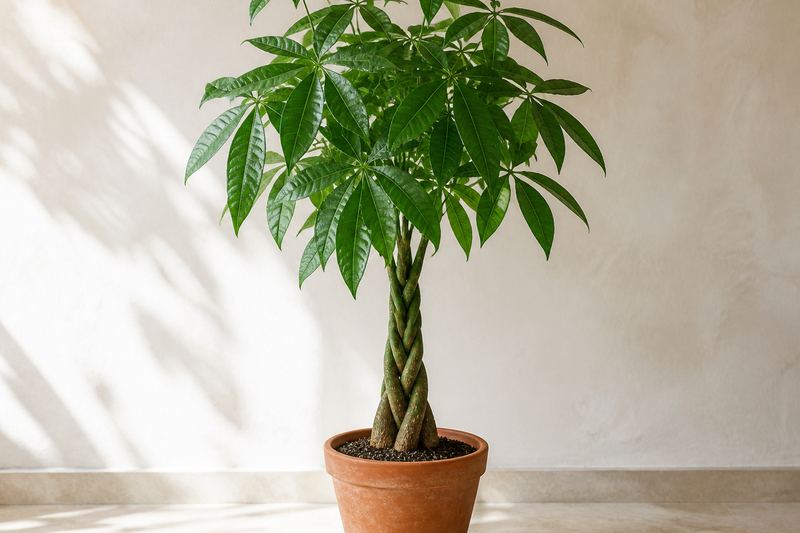
Money Tree
Pachira aquaticaIdentify Money Tree by its woody or braided trunks and palmately compound leaves, then coordinate filtered light, even drainage, watering, and trunk-by-trunk observation.
- Light
- bright filtered or indirect light with gradual exposure changes
- Water
- water evenly after the upper root zone dries, then remove all runoff
Linked plant profile
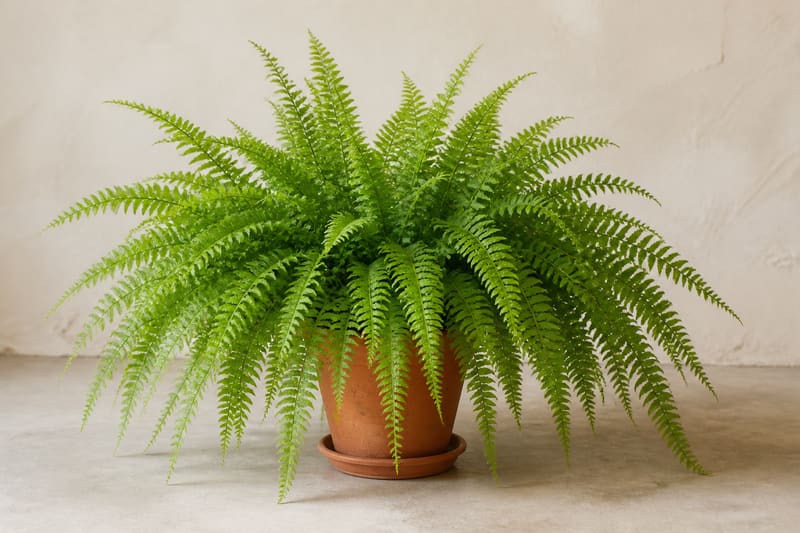
Boston Fern
Nephrolepis exaltata 'Bostoniensis'Identify Boston Fern by its fountain of arching pinnate fronds, then coordinate filtered light, even moisture, humidity, drainage, crown care, and seasonal growth.
- Light
- bright filtered light or partial shade without abrupt harsh sun
- Water
- keep evenly moist but not saturated, with complete drainage
Linked plant profile
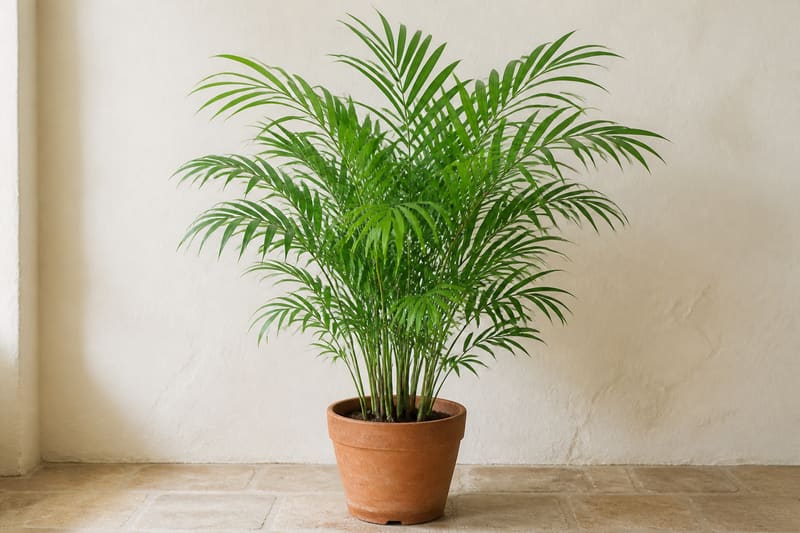
Parlor Palm
Chamaedorea elegansIdentify Parlor Palm by its slender green stems and fine pinnate fronds, then coordinate indirect light, measured watering, drainage, warmth, and slow growth.
- Light
- bright indirect light to light shade, protected from strong direct sun
- Water
- let the upper mix dry slightly, then water completely and remove runoff
Linked plant profile
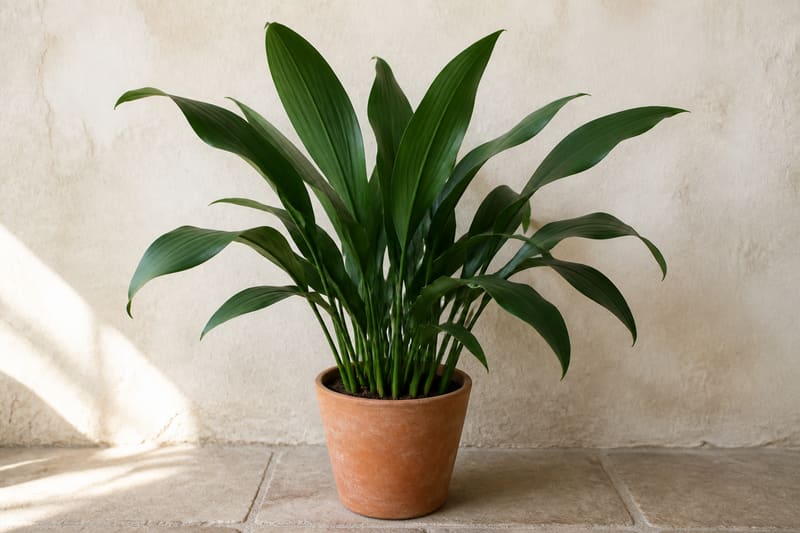
Cast Iron Plant
Aspidistra elatiorIdentify Cast Iron Plant by its rhizome-borne leathery leaves, then coordinate shade, measured watering, drainage, restrained feeding, and slow growth.
- Light
- low to moderate filtered light or shade, protected from direct sun
- Water
- water after the upper compost becomes dry to the touch, then drain completely
Linked plant profile
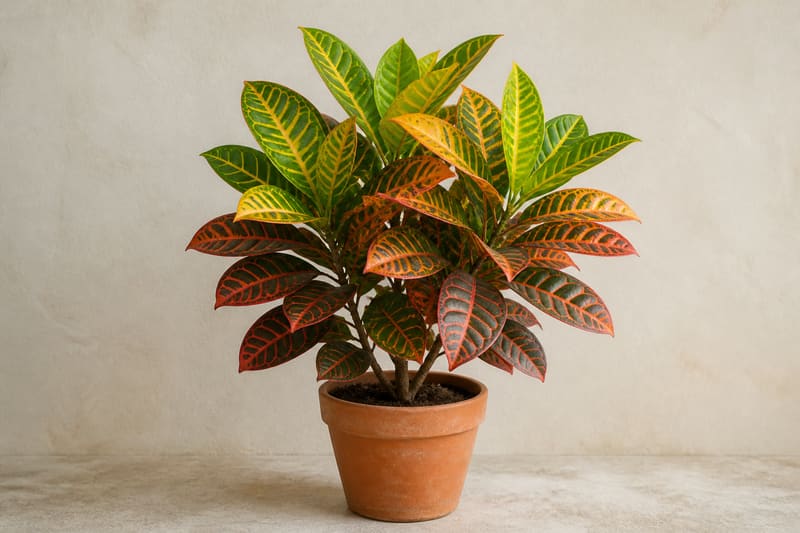
Croton
Codiaeum variegatumIdentify Codiaeum variegatum by its woody stems and cultivar-dependent colorful leathery leaves, then coordinate light, warmth, moisture, and drainage.
- Light
- bright filtered or indirect light, with any gentle direct exposure introduced gradually
- Water
- water after the upper half-inch to inch of mix dries, then drain completely
Linked plant profile
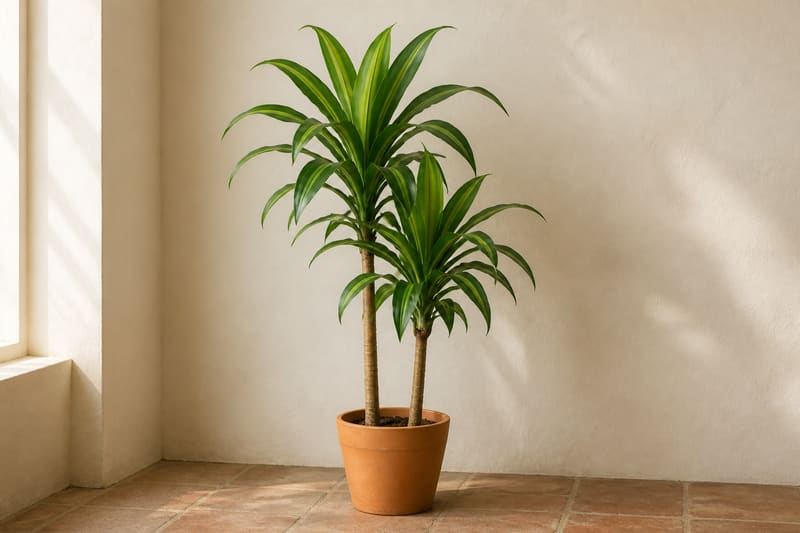
Corn Plant
Dracaena fragransIdentify Dracaena fragrans by its upright cane and broad arching strap-like leaves, then coordinate filtered light, moisture, drainage, warmth, and water quality.
- Light
- bright filtered or indirect light, with any gentle direct exposure introduced gradually
- Water
- water after the upper half-inch to inch of mix dries, then drain completely
Linked plant profile
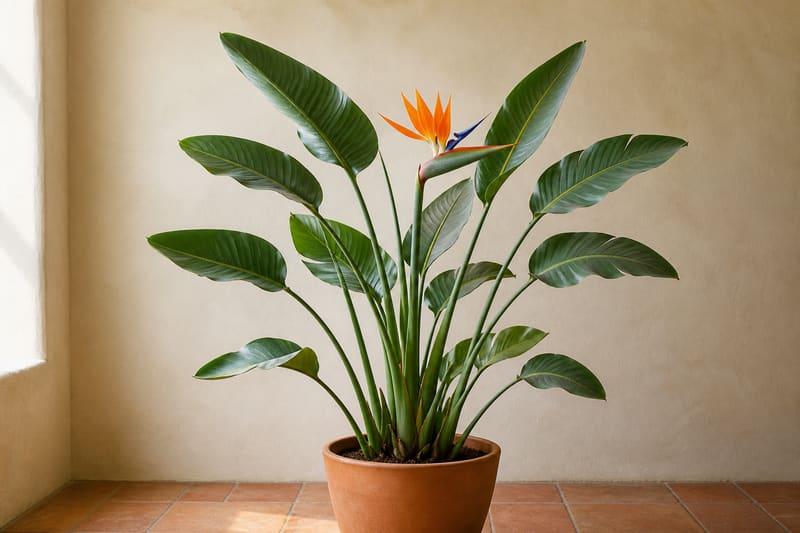
Bird of Paradise
Strelitzia reginaeIdentify Strelitzia reginae by its rhizomatous clump, long-stalked paddle leaves, and orange-blue flowers, then coordinate light, seasonal water, warmth, and space.
- Light
- abundant bright light, with stronger direct exposure introduced gradually
- Water
- keep evenly moist but not saturated during active growth, then water more sparingly in winter
Linked plant profile
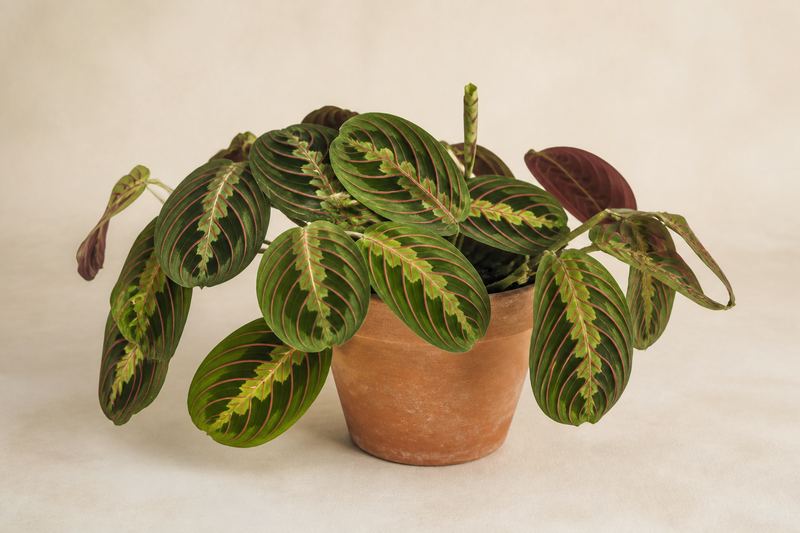
Prayer Plant
Maranta leuconeuraIdentify Maranta leuconeura by its low rhizomatous habit, patterned oval leaves, rolled new growth, and day-night leaf movement, then coordinate filtered light, even moisture, warmth, and humidity.
- Light
- bright filtered or indirect light; protect patterned leaves from direct sun
- Water
- keep evenly moist but never saturated during active growth, then reduce frequency as winter demand slows
Linked plant profile
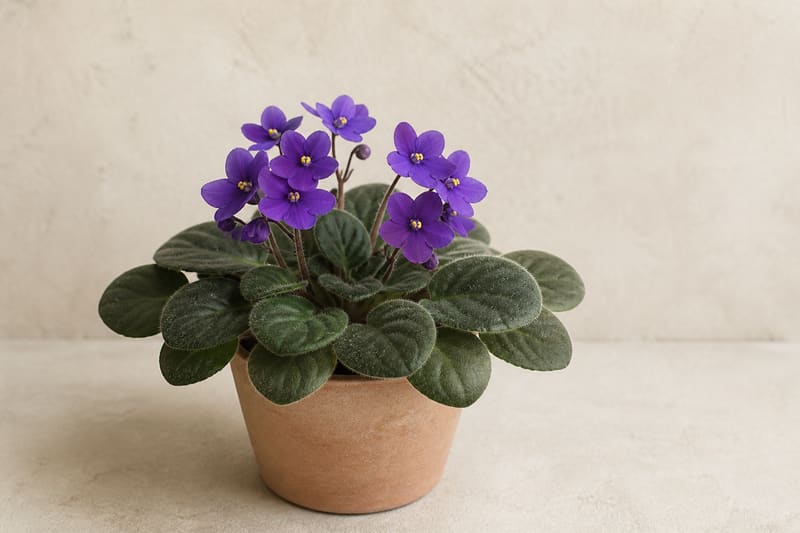
African Violet
Streptocarpus ionanthusIdentify African Violet by its compact rosette, fuzzy rounded leaves, and flower clusters, then coordinate gentle light, room-temperature water, airy soil, warmth, and clean crown care.
- Light
- bright filtered or indirect light; protect fuzzy leaves from strong direct sun
- Water
- use room-temperature water when the surface begins to dry, keep the crown dry, and drain fully
Linked plant profile
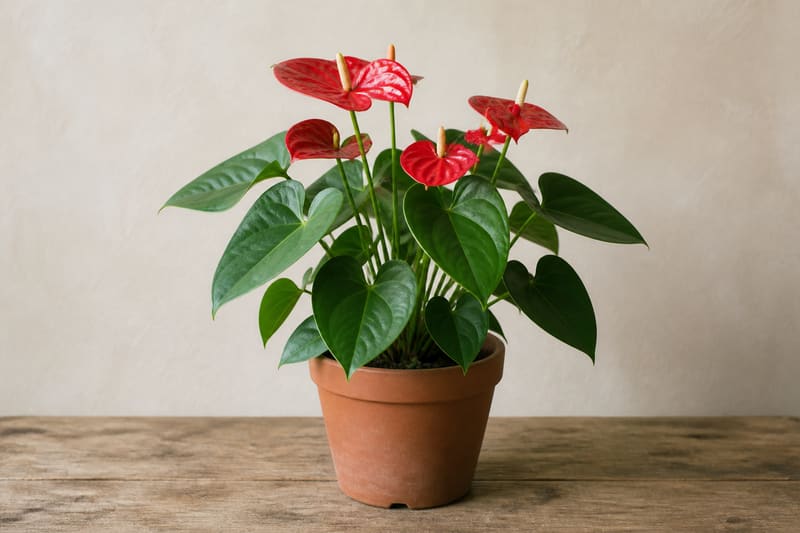
Anthurium
Anthurium andraeanumIdentify Anthurium andraeanum by glossy heart-shaped leaves, colorful spathes, a straight spadix, epiphytic roots, and its warm bright-indirect indoor needs.
- Light
- Bright indirect or filtered light
- Water
- water as the upper mix approaches dry, wet the complete root zone, and drain fully
Linked plant profile
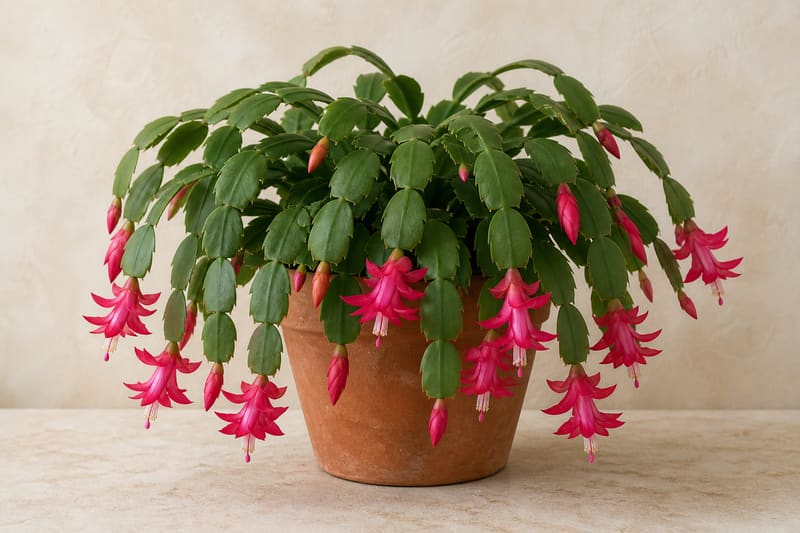
Christmas Cactus
Schlumbergera × buckleyiIdentify true Christmas Cactus by rounded scalloped stem segments and drooping winter flowers, then coordinate filtered light, airy roots, and seasonal bloom cues.
- Light
- bright filtered or indirect light; protect from harsh direct sun and preserve long dark nights for bud initiation
- Water
- water thoroughly after the upper root zone dries; avoid prolonged saturation and severe drought during active growth or flowering
Linked plant profile
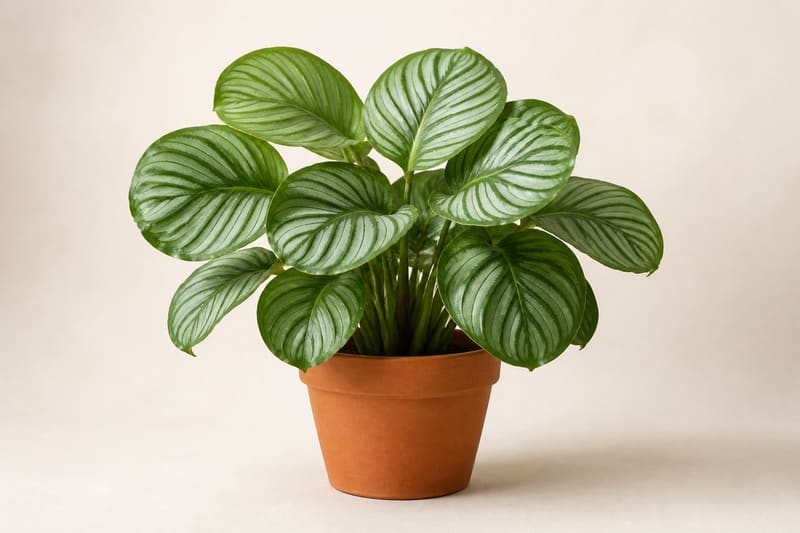
Calathea Orbifolia
Goeppertia orbifoliaIdentify Calathea Orbifolia by its large round silver-striped leaves and rhizomatous clump, then coordinate filtered light, even moisture, humidity, warmth, and drainage.
- Light
- bright indirect or filtered light; protect broad leaves from direct sun
- Water
- keep evenly moist during active growth without saturation, then reduce frequency as cooler lower-light demand slows
Linked plant profile
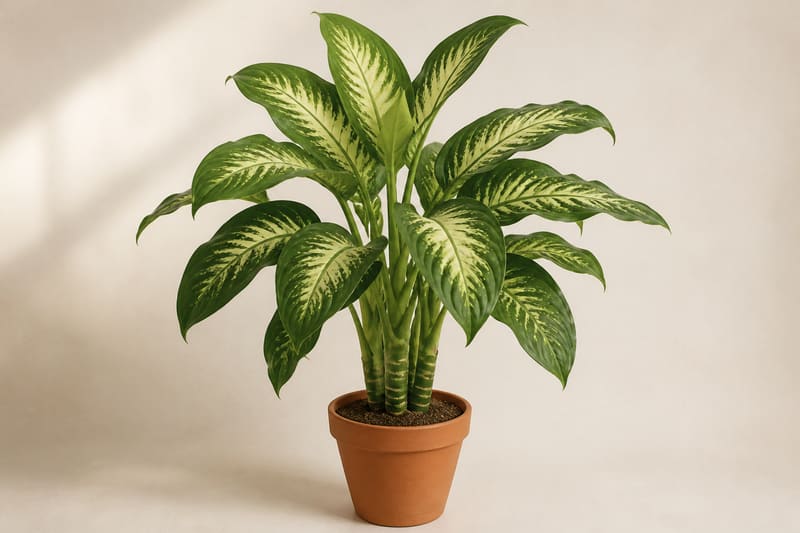
Dieffenbachia
Dieffenbachia seguineIdentify Dieffenbachia seguine by its upright cane, broad cream-variegated leaves, and sheathing petioles, then coordinate filtered light, measured watering, warmth, drainage, and safe handling.
- Light
- bright filtered or indirect light for compact variegated growth; acclimate gradually and avoid abrupt hot direct sun
- Water
- water thoroughly after the upper inch and pot weight show demand, then drain completely; avoid both standing runoff and severe repeated collapse
Linked plant profile
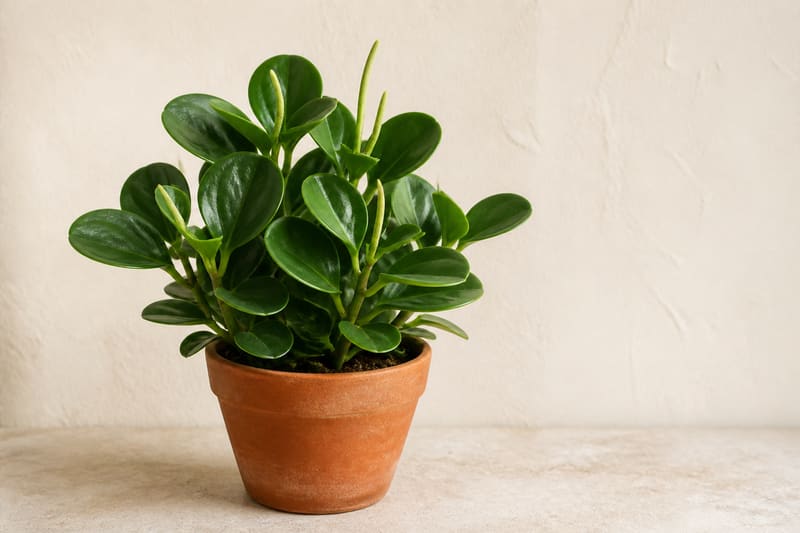
Baby Rubber Plant
Peperomia obtusifoliaIdentify Peperomia obtusifolia by its compact fleshy stems, glossy blunt-tipped leaves, and slender flower spikes, then coordinate light, moisture, and root aeration.
- Light
- bright indirect or filtered light, with protection from abrupt hot sun
- Water
- water after much of the occupied root zone dries, then drain completely
Linked plant profile
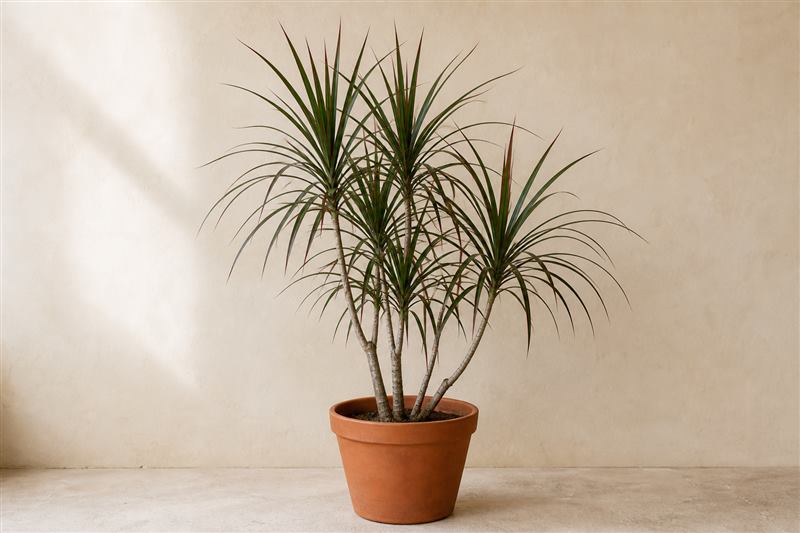
Madagascar Dragon Tree
Dracaena reflexa var. angustifoliaIdentify Madagascar Dragon Tree by its slender ringed canes and narrow red-edged arching leaves, then coordinate light, dry-down, water quality, and root aeration.
- Light
- bright indirect light, with gradual acclimation to stronger exposure
- Water
- water after partial root-zone dry-down, then drain completely
Linked plant profile
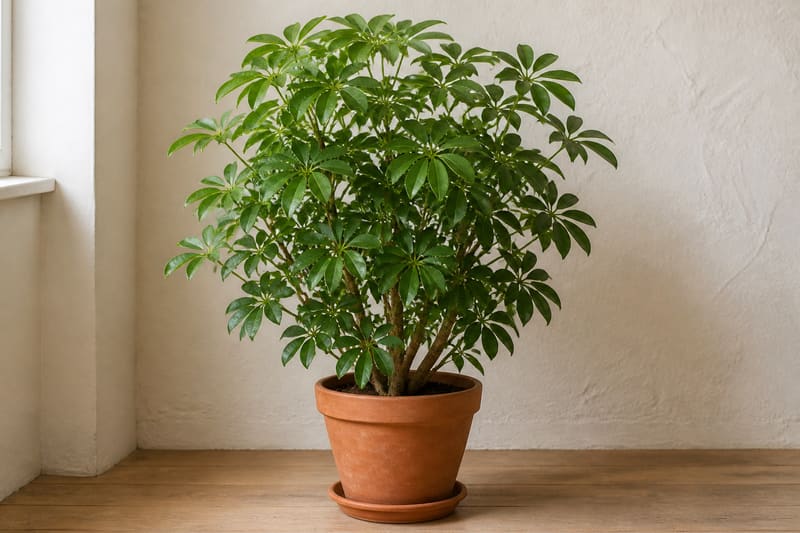
Dwarf Umbrella Tree
Heptapleurum arboricolaIdentify Dwarf Umbrella Tree by its glossy palmate leaf fans and branching woody stems, then coordinate filtered light, measured dry-down, pruning, and pest inspection.
- Light
- bright filtered or indirect light with gradual acclimation to stronger exposure
- Water
- water thoroughly after substantial occupied-root-zone dry-down, then drain completely
Linked plant profile
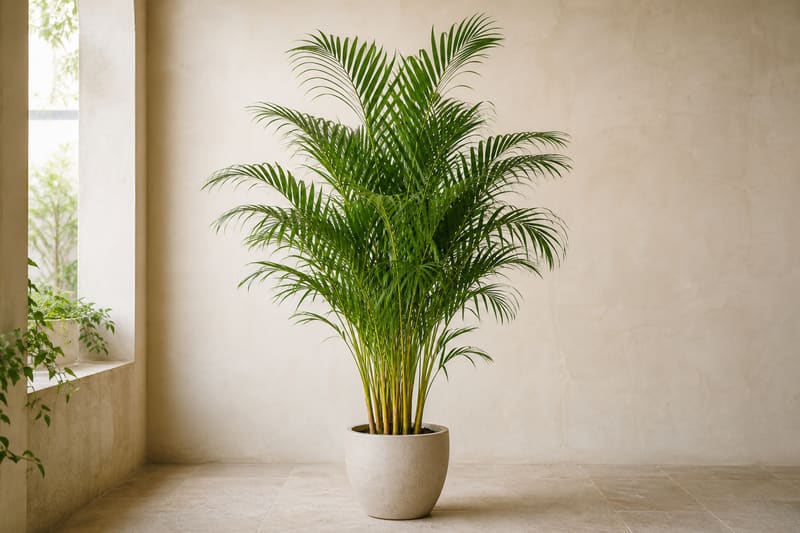
Areca Palm
Chrysalidocarpus lutescensIdentify Areca Palm by its clustered yellow-green canes and arching pinnate fronds, then coordinate bright indirect light, measured moisture, clean pruning, and pest inspection.
- Light
- bright indirect or filtered light with gradual acclimation to stronger exposure
- Water
- water thoroughly after much of the occupied root zone has dried, then drain completely
Linked plant profile
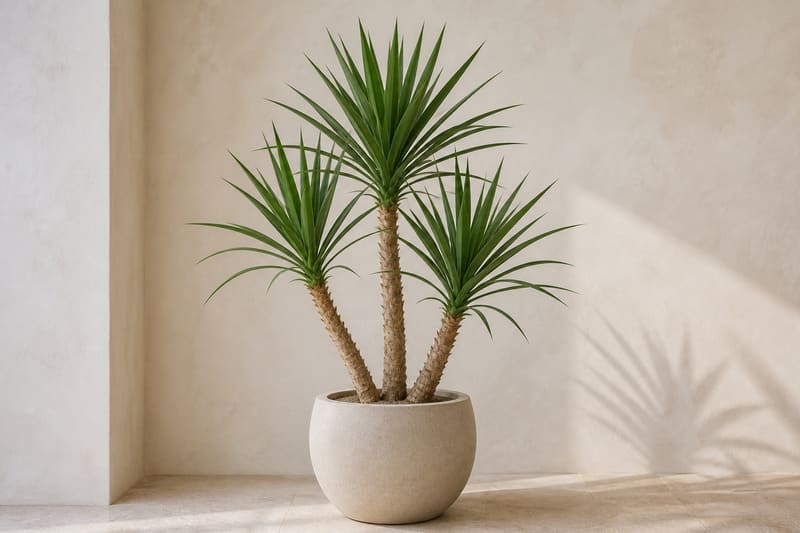
Yucca Cane
Yucca giganteaIdentify Yucca gigantea by its thick woody canes and soft-tipped sword-like leaf rosettes, then coordinate bright light, substantial dry-down, drainage, and warmth.
- Light
- bright indoor light with any direct exposure introduced gradually
- Water
- let much of the occupied root zone dry, then water thoroughly and drain completely
Linked plant profile
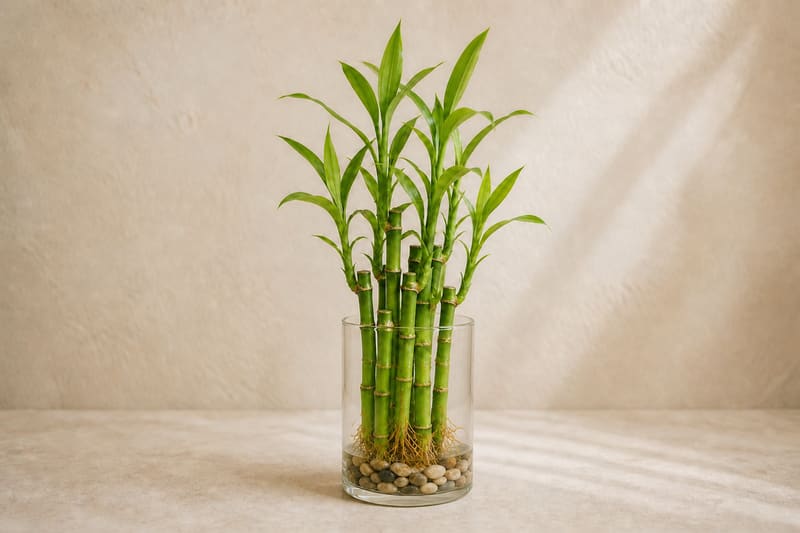
Lucky Bamboo
Dracaena sanderianaIdentify Lucky Bamboo as Dracaena sanderiana, then coordinate water or soil culture, filtered light, roots, cane health, feeding, propagation, pests, and pet safety.
- Light
- Bright indirect or filtered light; protect from hot direct sun
- Water
- Clean low-mineral water around roots for water culture, or moist but well-drained soil with the upper inch allowed to begin drying
Linked plant profile
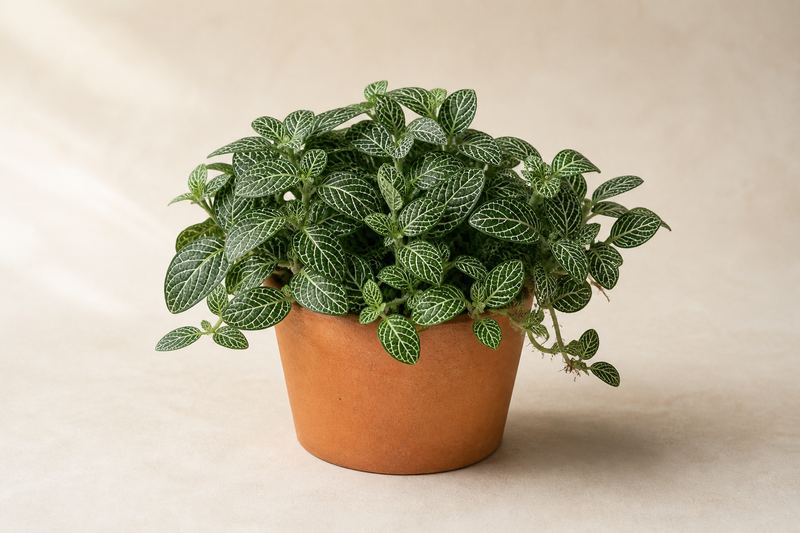
Nerve Plant
Fittonia albivenisIdentify Nerve Plant by its low creeping habit, opposite oval leaves, and white, pink, or red vein network, then coordinate filtered light, steady moisture, humidity, pruning, and pet-safe placement.
- Light
- Bright to medium filtered light, protected from hot direct sun
- Water
- Keep the shallow root zone evenly managed; water as the surface begins to dry and the pot lightens, then drain completely
Linked plant profile
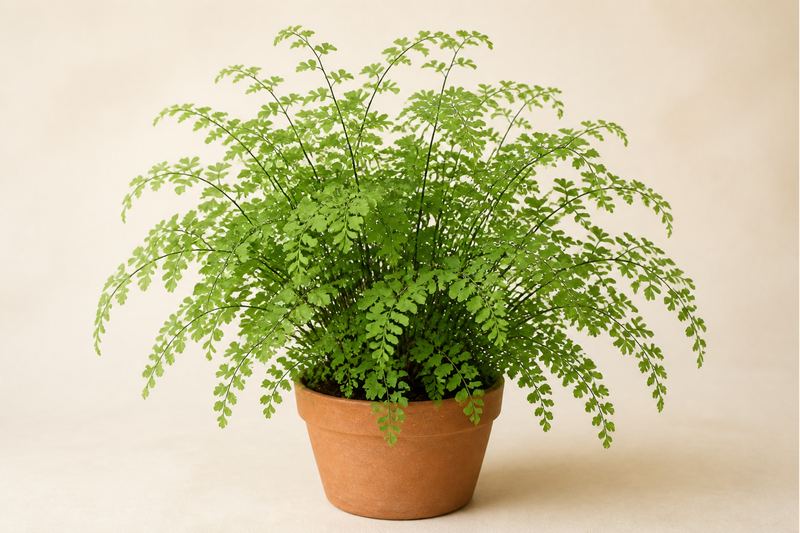
Maidenhair Fern
Adiantum raddianumIdentify Maidenhair Fern by its fine black wiry stipes, delicate fan-shaped pinnules, coiled new croziers, and clumping rhizome, then coordinate bright shade, moist aerated soil, humidity, and careful pruning.
- Light
- Bright indirect light or partial shade, sheltered from strong direct sun and hot glass
- Water
- Keep the root zone consistently moist but aerated; water as the surface begins to lose moisture and the pot lightens, then drain completely
Linked plant profile
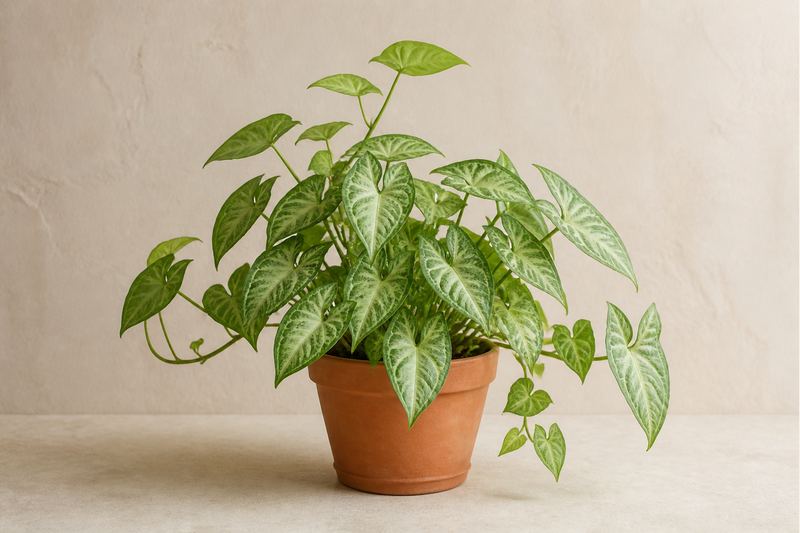
Arrowhead Plant
Syngonium podophyllumIdentify Arrowhead Plant by its juvenile arrow-shaped leaves, sheathing petioles, node-bearing climbing stems, aerial roots, and mature divided foliage, then coordinate filtered light, drainage, pruning, support, and pet safety.
- Light
- Bright indirect light for green forms and bright filtered light for variegated forms, protected from intense direct sun
- Water
- Water after the upper root zone begins to lose moisture and the pot becomes lighter, then drain completely and never retain water in a cachepot
Linked plant profile
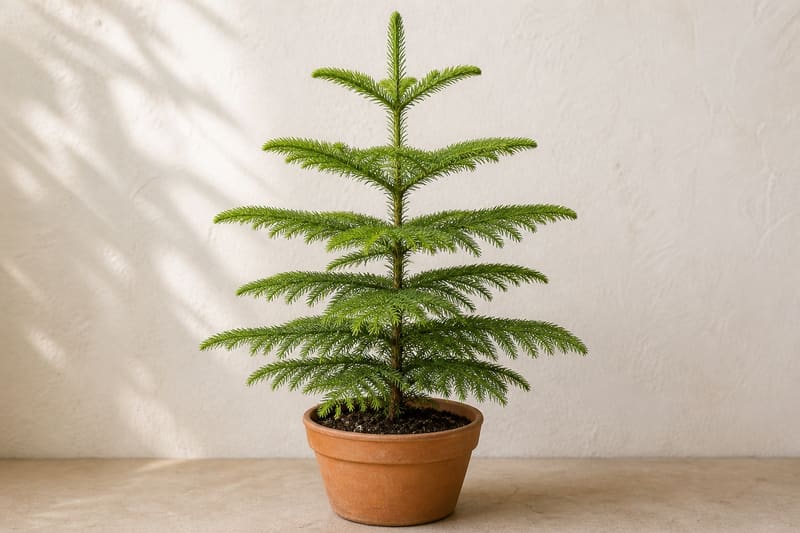
Norfolk Island Pine
Araucaria heterophyllaIdentify Norfolk Island Pine by its single central leader, regular horizontal branch whorls, and soft juvenile foliage, then coordinate bright light, even moisture, humidity, conservative pruning, and safe holiday display.
- Light
- Bright indirect or filtered light with gradual acclimation to direct exposure and deliberate rotation for balanced tiers
- Water
- Water when the upper root zone begins to dry and the pot becomes lighter, then wet evenly and discard runoff without allowing chronic drought or saturation
Linked plant profile
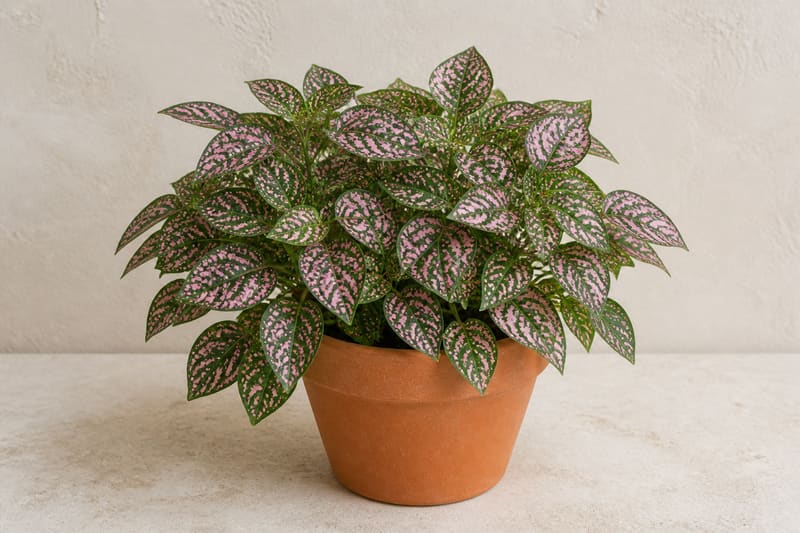
Polka Dot Plant
Hypoestes phyllostachyaIdentify Polka Dot Plant by its compact branching habit and opposite green leaves irregularly speckled pink, red, or white, then coordinate filtered light, steady moisture, warmth, and pinching.
- Light
- Bright to medium filtered light, protected from hot direct sun
- Water
- Keep the root zone evenly managed; water as the surface begins to dry and the pot lightens, then drain completely
Plants mentioned
Featured plants
Monstera
the documented reference profile in this collection.
Pothos
mentioned for context; no profile is linked from this collection.
Snake Plant
mentioned for context; no profile is linked from this collection.
Rubber Plant
a documented upright woody Ficus profile.
Fiddle Leaf Fig
a documented upright woody Ficus profile.
Chinese Evergreen
a documented clump-forming Aglaonema foliage profile.
Heartleaf Philodendron
a documented climbing or trailing tropical aroid profile.
Moth Orchid
a documented flowering epiphytic orchid profile.
Money Tree
a documented woody tropical tree with radiating compound leaflets.
Boston Fern
a documented tropical fern with arching pinnate fronds.
Parlor Palm
a documented slow-growing understory palm with fine pinnate fronds.
Cast Iron Plant
a documented rhizomatous shade foliage profile.
Croton
a documented colorful woody tropical foliage profile.
Corn Plant
a documented upright cane-form tropical foliage profile.
Bird Of Paradise
a documented large rhizomatous tropical foliage and flowering profile.
Prayer Plant
a documented low rhizomatous tropical foliage profile with day-night leaf movement.
African Violet
a documented compact tropical flowering rosette with fuzzy leaves.
Anthurium
a documented flowering tropical aroid profile.
Christmas Cactus
rounded segmented stems, airy epiphytic roots, and a seasonal bloom cycle.
Calathea Orbifolia
a broad silver-striped tropical foliage profile with a humidity-sensitive leaf system.
Dieffenbachia
an upright cream-variegated tropical foliage plant requiring safe sap handling.
Baby Rubber Plant
a compact tropical peperomia with fleshy stems, glossy blunt-tipped leaves, and slender flower spikes.
Madagascar Dragon Tree
an upright multi-cane tropical plant with narrow red-edged leaf crowns.
Dwarf Umbrella Tree
a branching tropical shrub with glossy palmate leaf fans.
Areca Palm
a clumping tropical palm with yellow-green canes and arching pinnate fronds.
Yucca Cane
a documented upright cane-form tropical foliage profile.
Lucky Bamboo
a tropical Dracaena with water- or soil-grown roots and upright cane-like stems.
Collection notes
Quick Answer
Tropical indoor plants are easiest to choose when you compare light, watering rhythm, and the space they need rather than leaf shape alone.
What Are Tropical Indoor Plants
These are warm-climate plants commonly grown indoors for lush foliage; indoor success depends on matching their natural growth habits to a stable room environment.
Care Similarities
- Use pots with drainage and adjust watering to light.
- Watch new growth and make one care change at a time.
Beginner Recommendations
Start with Monstera if you have bright indirect light and can check soil weekly; choose a more drought-tolerant option if the room is dimmer.
Christmas Cactus Learning Path
Sources
- https://plants.ces.ncsu.edu/plants/monstera-deliciosa/
Frequently asked questions
Which tropical indoor plant is easiest for beginners?
Choose the plant whose light and watering needs match your room and weekly routine.
Can these plants share the same care?
They share broad indoor principles, but each plant still needs its own light and moisture check.